
Perfect Days (Wim Wenders, 2023). Gentle, gorgeous, and unfailingly kind, this drama stays close to Hirayama (Kōji Hashimoto), a Tokyo resident who works as a cleaner of the city’s more artfully designed public restrooms. The action is small-scale and intimate. Director Wim Wenders (who co-wrote the script with Takuma Takasaki) takes evident pleasure in lingering on the details of Hirayama’s days, such as his morning rituals before going to work and his bookstore trips to acquire one new slender volume that is sure to earn approving commentary from the proprietor. When disruption arises — from a feckless coworker (Tokio Emoto) or a surprise visit from his niece (Arisa Nakano) — the conflict is decidedly small in scale. There are intimations of greater family troubles in Hirayama’s past, but Wenders wisely opts for discretion in his storytelling, as if he’s promised his lead character that secrets will be kept. The great care Wenders takes ensure that Hirayama can be more deeply known than he could have been through any number of anguished expository monologues. Perfect Days is marvelous and exquisite. It seems small, but it is emotionally monumental.
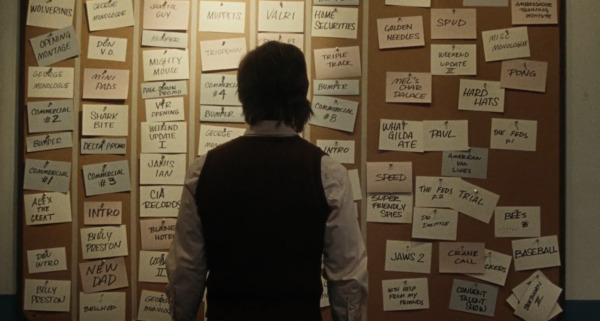
Saturday Night (Jason Reitman, 2024). Writer-director Jason Reitman takes so many dramatic liberties in this rendering of the ninety minutes before the first episode of Saturday Night Live (then without the last word in the title) that he winds up with an utterly unconvincing procession of chaotic nonsense. In an effort to capture the chaotic spirit of the comedy program, Reitman contrives scenarios that aren’t convincing in the slightest. For example, Lorne Michaels (Gabriel LaBelle) decides mere minutes before airtime that Chevy Chase (Cory Michael Smith) will host the “Weekend Update” sketch and feeds him jokes from Alan Zweibel (Josh Brener), newly hired from a visit to a nearby bar. Saturday Night rushes forward with nothing but missteps. Reitman’s eager need to load in SNL superfan Easter eggs is especially grating. (The most egregious is the appearance of Colon Blow cereal box, referencing a sketch that wouldn’t arrive for about another fifteen years.) Plenty of film’s cast members nail their impressions of the famous figures they depict, but no one is given the space to shape a fully defined character. Lamorne Morris probably comes closest as Garrett Morris, imbuing him with a preemptive resentment that feels like the proper reaction to the environment he’s in. Resentment is a fair reaction to the movie, too.
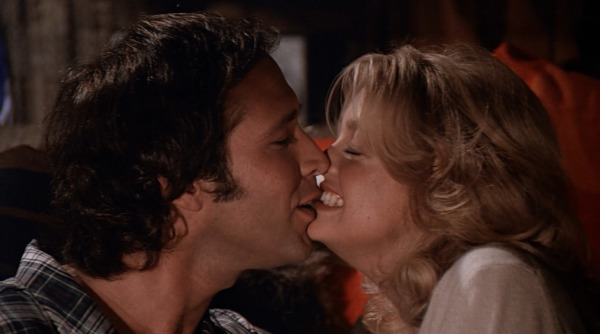
Foul Play (Colin Higgins, 1978). For his feature directorial debut, Colin Higgins, who’d proven himself a hit screenwriter with Harold and Maude and Silver Streak, the Australian filmmaker wanted to pay homage to Alfred Hitchcock. He cooked up a plot an unassuming person who gets in over their head with a batch of ne’er-do-wells hatching a complicated, murderous scheme. The film ultimately feels more beholden to What’s Up, Doc?, Peter Bogdanvich’s screwball comedy throwback that was a box office champion a few years earlier, right down to the raucous chase scene up and down the undulating streets of San Francisco. Goldie Hawn plays Gloria Mundy, a kind, shy librarian who finds herself pursued by a series of thugs in pursuit of a well-hidden piece of evidence that she unwittingly picked up from a stranger. Along the way, she gets guidance and surprisingly effective physical protection from her feisty landlord (Burgess Meredith) and comes under the watchful, only mildly leering eyes of San Francisco law enforcement officer Tony Carlson (Chevy Chase). With the latter, a romance emerges. Foul Play is a nifty romantic comedy with a thriller that doesn’t thrill all that much, although there is a clever underlying conceit behind the high-profile murder that’s planned. The film basically takes it strengths and weaknesses from Hawn’s performance. She’s completely charming in the softer scenes and comes across as more curious than concerned about the dangerous doings around here. As was the case with his smash hit follow-up, 9 to 5, Higgins the directors would have done Higgins the writer a major favor by pruning out the more cartoonish scenes, most notably here a comedic sequence that send Billy Barty careening through the air.
Discover more from Coffee for Two
Subscribe to get the latest posts sent to your email.
 Coffee for Two