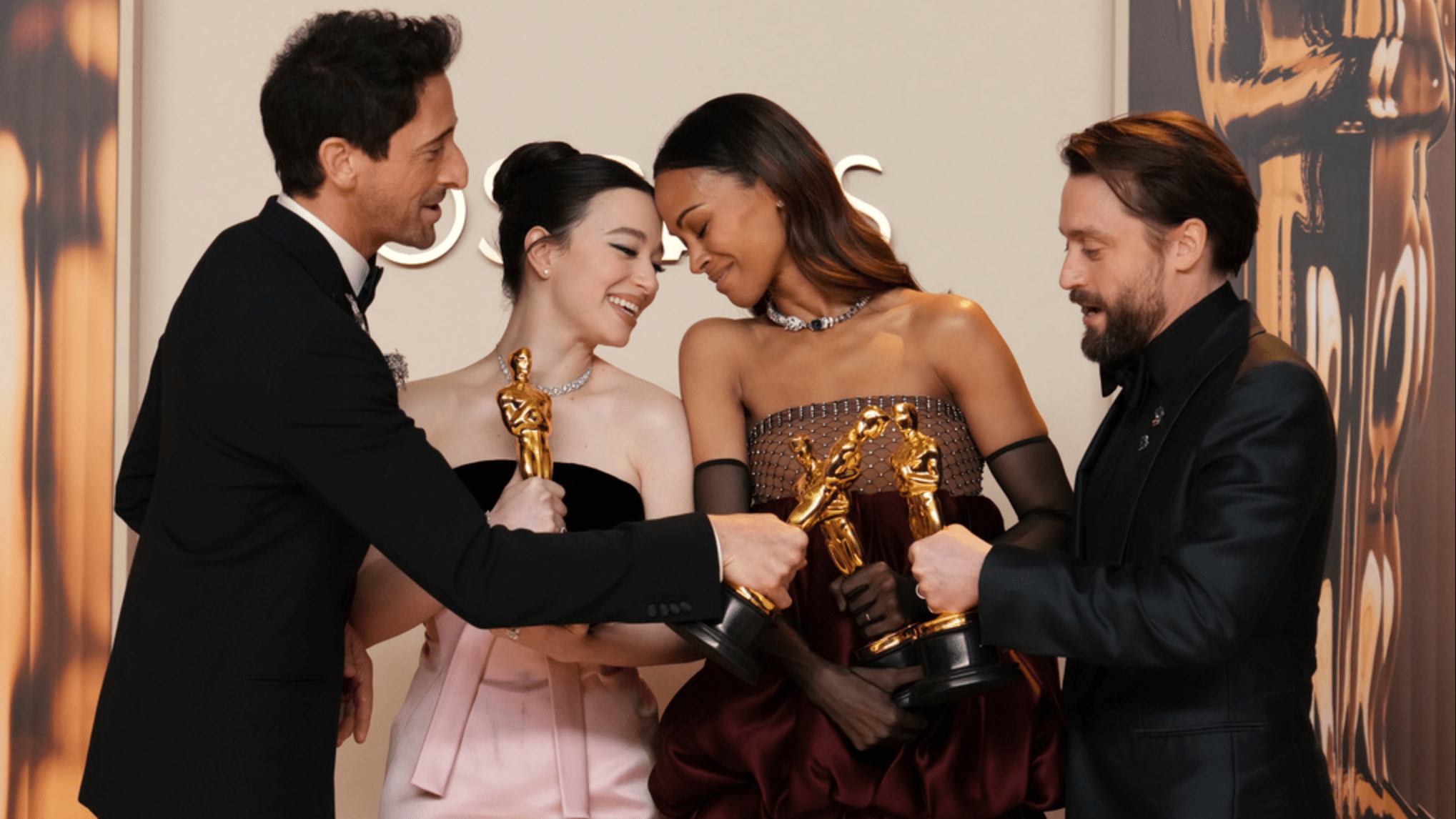
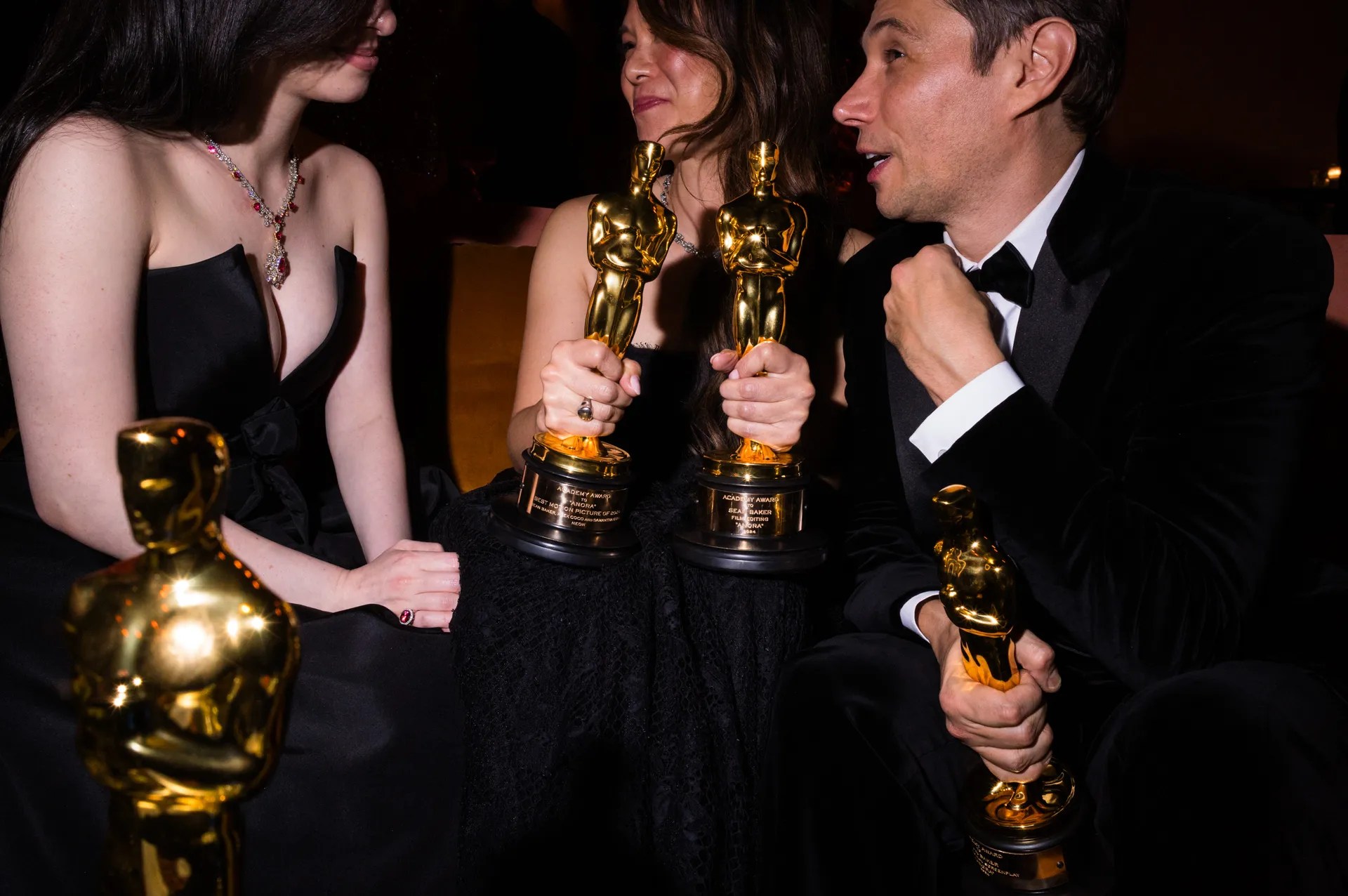
Yesterday morning, devoted indie filmmaker Sean Baker had no Academy Awards in his possession. He wakes up this morning with four of the gleaming golden statuettes that have his name engraved into the base. That’s a Fantasia brooms–style barrage unseen on the Oscar stage since Walt Disney achieved it in the nineteen-fifties, winning for four different films, three of them shorts. (Bong Joon-ho was also called to the stage four times in the year of Parasite, but the Best International Feature trophy he accepted technically belongs to South Korea.) After declaring on the record that Baker’s Anora was far and away the best film of 2024, I certainly have little to complain about with how Academy voting landed. Even major wins I might quibble with — such as those for Adrien Brody and Zoe Saldaña — I can objectively see as worthy. Fifty years from now, when some budding cineaste watches The Brutalist for the first time, they’ll be quick to assume Brody won an Oscar for that performance. Thinking of that, the wins feel right.
I’ve retired from the prediction game a long time ago, but I would have joined just about every awards season pundit in anticipating a Demi Moore triumph in the category for leading actresses, even as I unabashedly declared the superiority of the performance of surprise winner Mikey Madison. Deep down, though, I never really believed that it could happen. I kept thinking of the last shot of the movie and how it would feel in a montage of Best Actress winners cut up against Meryl Streep in Sophie’s Choice or Nicole Kidman in The Hours. I don’t mean to disparage Moore’s work in The Substance, which I do think is very strong; it’s just so wildly different than what the Academy is typically ready to embrace, even a changing Academy that can, for example, see past the unsettling oddness of Poor Things to recognize the undeniable artistry there. It probably doesn’t help that voters had to overcome biases about Moore’s past work, no matter how eloquently and movingly she addressed her own reputation in prior acceptance speeches. In retrospect, Moore’s nomination and frontrunner status looks a lot like the trip Mickey Rourke took with The Wrestler years ago. Both were being celebrated for rougher fare than the Academy usually honors and were saddled with filmographies full of subpar features and acting. When it finally came time to fill out the last ballots, enough Academy members couldn’t bring themselves to check the box by their names.
The ceremony itself was fine, a classic example of the Oscar ceremony’s perpetual dance of two steps forward and one step back. After a few years of really botching the in memoriam segment, the producers finally figured out they should be focusing on the departed people on the screen rather than the musical performers providing accompaniment to the elegiacal presentation. But then they compensated for the understandable decision to bypass the on-stage performances of nominated songs by cooking up a couple production numbers on the flimsiest of premises (including a James Bond–themed segment just three years after the last time they turned over a bunch of the broadcast’s time to a tribute to the screen superspy) that were also mounted with the eye-rolling cheesiness of Oscar ceremonies from the distant past. I hasten to note that Arianne Grande and Cynthia Erivo’s elegant, powerhouse opener that lined up a series of Oz-connect songs was the exception. When the proceedings begin with a showstopper, it can be hard to make any following numbers satisfactorily land. As a host, Conan O’Brien was at his best once he got past the obligation of the one-joke-per-Best-Picture-nominee opening monologue and could simply be a casual, comfortably amusing guide through the evening.
This was also a year that again demonstrated that the route to a stronger show is emphasizing the awards themselves, whether the quintet of presenters really talking about the impressive efforts of the nominees in the costuming and cinematography categories (and, yes, serving the songwriting nominees better with a pre-tape that lets them talk about the craft they brought to the honored tune) or simply giving the winners the room to make memorable moments with their speeches. Kieran Culkin’s characteristically funny, impish comedy, Saldaña’s torrent of emotion, the Flow winners cheering independently made animated features and their homeland of Latvia, Paul Tazewell noting he was the first black man to win for costuming, and Baker’s impassioned advocacy for theatrical exhibition. Not every speech was laudable, with Brody’s overlong, indulgent acceptance as a prime offender. But it’s still a chance worth taking. As usual, I think the best strategy is to let the Oscars be the Oscars.
Discover more from Coffee for Two
Subscribe to get the latest posts sent to your email.

