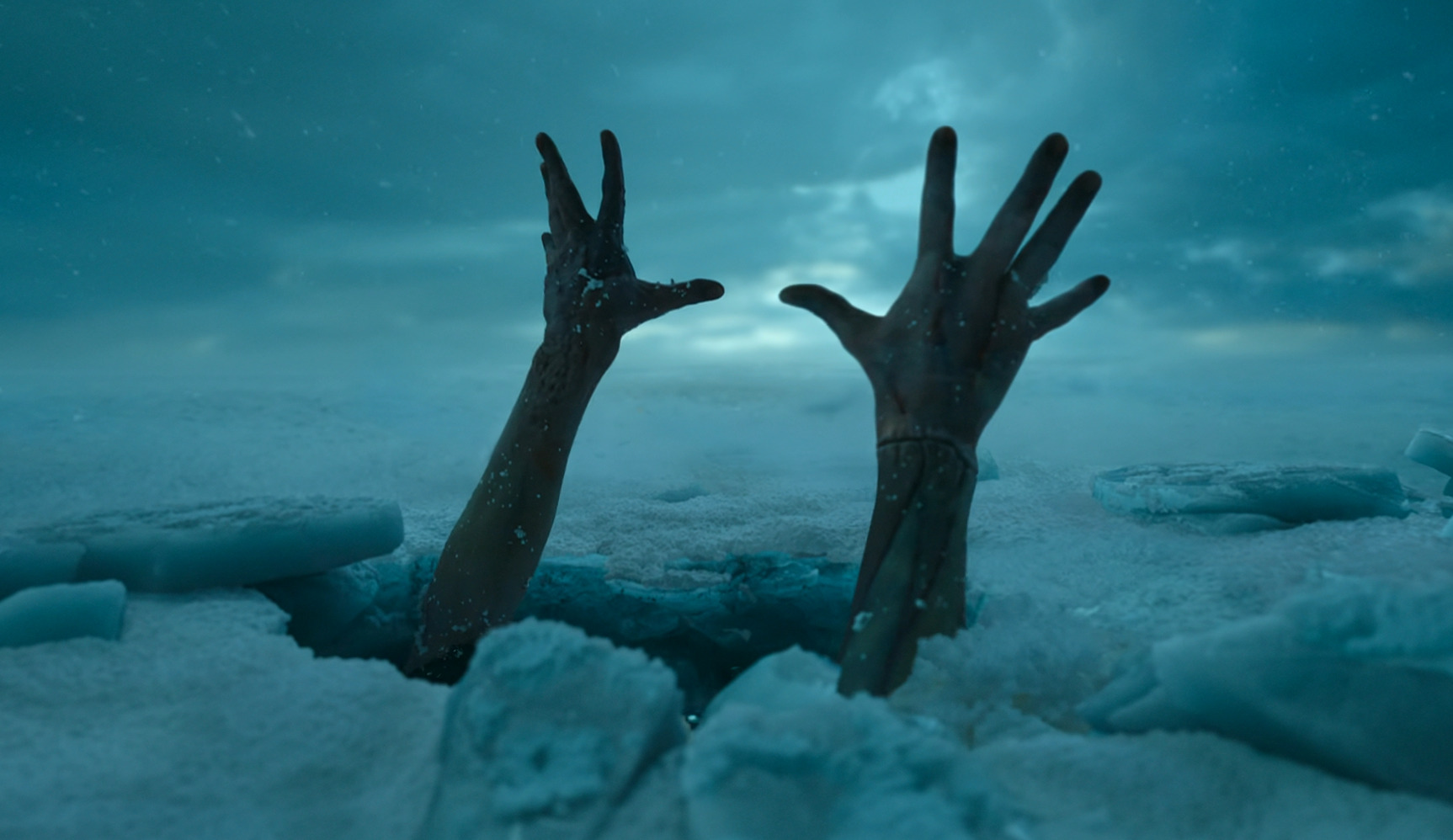
It’s no surprise that Frankenstein, the classic 1818 novel penned by Mary Shelley, appeals to Guillermo del Toro. The filmmaker has essentially built his career on sympathy for the creatures that others are quick to declare are monsters and presenting the calm counterargument that maybe manipulative, cruel human beings are the ones who really deserve our loathing. Although the movies have spent around a century largely ascribing mindless villainy to the reconstructed, reanimated fellow who’s the most famous product of Victor Frankenstein’s home laboratory, the original gothic tome takes a far more nuanced view of matters.
Certainly, del Toro is an earnestly attentive reader. This new film version is faithful to the structure, tone, and sensibility of Shelley’s book. Among other things, del Toro mirrors the shifting perspectives Shelley uses, most notably letting Victor (Oscar Isaac) initially spin the main tale before he’s forced to cede the floor to the towering creature (Jacob Elordi) he fabricated out of spare parts retrieved from various cadavers. It’s less of a Rashomon situation, with the same events colored by different viewpoints, than a passing of the baton, an I’ve-got-it-from-here continuation of the narrative. The sympathies of del Toro are clear from the jump; the creature doesn’t require humanizing when it’s his turn to speak.
There’s no denying that the film is handsomely mounted. Many of del Toro’s most trusted regular collaborators report for duty, and every bit of the film that can be categorized as craft — the sets, the costume, the cinematography, all of it — is meticulous. It genuinely feels as if del Toro’s imagination has been fully, firmly represented on the screen. Sumptuous as it is, all the trappings often seem in the service of a film that has a hollow ring to it. Elordi’s performance is emblematic. It is physically precise and obviously deeply thought out, right down to every bend of a finger as the creature makes sense of this life that was thrust upon him. Even as he aches and rages, though, there’s no weight to the emotions. For me as a viewer, the feelings are seen rather than felt.
I think part of the problem is that del Toro imposes a misguided psychology on the film. The full title of Shelley’s novel is Frankenstein; or, The Modern Prometheus, and that invocation of the Greek deity who created humanity is a key to understanding the power of the enduring story. Shelley depicts and damns the hubris of men who would play at being gods. In Del Toro’s Frankenstein, such arrogant folly is mentioned in the dialogue, but it doesn’t embed in the drama. This Frankenstein concerns itself too much with a fleshed out backstory for Victor, which in turn makes the film mostly about how bad dads create other bad dads until every once in a while a bad dad sees another dad who’s so bad that he realizes bad dads are bad and he decides to become a better dad. That thesis doesn’t have a grandeur or import in alignment with the film around it. Maybe del Toro thinks that approach is a way to enliven an oft-told story for the twenty-first century. Instead, Frankenstein appears to be put together well, but it stays dead.
Discover more from Coffee for Two
Subscribe to get the latest posts sent to your email.

