I’m starting to think Alex Garland wanted to see how close he could get to writing a zombie movie without any zombies in it. When the screenwriter recently re-teamed with director Danny Boyle to check in on the dystopian nightmare they created in the 2002 film 28 Days Later, they seemed least interested in the scenes of the decaying undead tearing into human beings like famished frat boys in the sports bar on twenty-five-cents wings night. They still included those sorts of scenes in that follow-up, 28 Years Later, but their dark hearts clearly weren’t in it. Now, around six months later (since tracking time is one of the things we do with these films), that revival has spawned a quick sequel that strays even further away from zombie chaos. It’s all the better for that choice.
28 Years Later: The Bone Temple picks up right where its predecessor left off. In a Britain cast into primitivism by nearly three decades of contending with a virus that causes the afflicted to turn mad and murderous, an orphaned lad named Spike (Alfie Williams) has come across fellow survivors who are even more terrifying. It’s a crew of roving thugs with matching outfits, a gang of droogs who’ve exchanged bowler hats and codpieces for shaggy blond wigs and tracksuits that evoke the look of Jimmy Savile, a BBC host who was a sexual predator. The despicable history of this particular public figure came to light after the events of the movie, so Garland is able to position the scandal as unknown within the narrative while adding a layer of added menace to the viewer. As a mean of survival, Spike reluctantly accepts his inclusion to the group after he prevails in a disturbing initiation ritual.
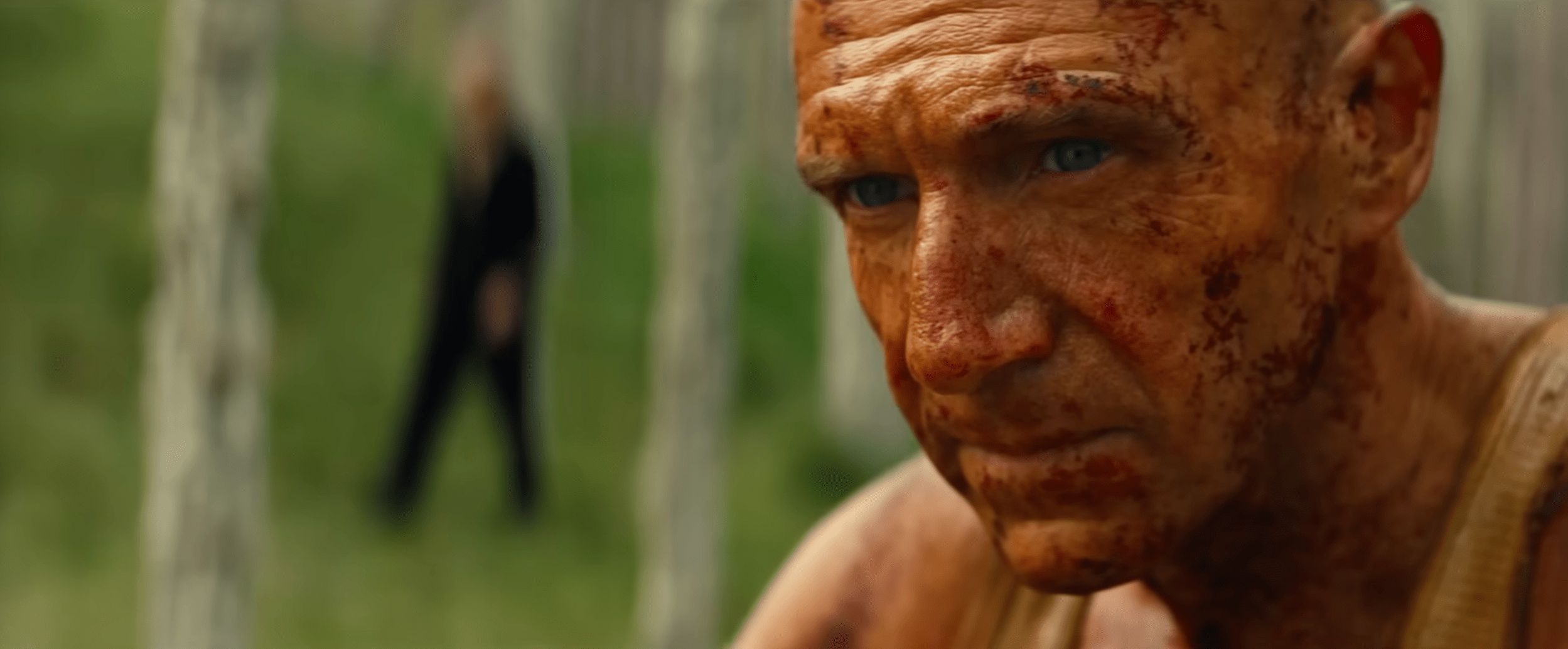
The film also follows Dr. Ian Kelson (Ralph Fiennes), introduced in the preceding film, as he tends to his little corner of this damaged world. Fiennes is so strong in the role — heartfelt and vulnerable and oddly charismatic — that there’s a decent chance his story would be compelling if all he did was tend to his pile of skulls and wind down with Duran Duran records. Instead, he develops a drug-aided kinship with a hulking zombie that he nicknames Samson (Chi Lewis-Parry). It’s like a stoner-hang-out movie with a risk that one of the hazed-out buddies might chew the larynx out of the other one.
With the zombie attacks kept at a bare minimum, Garland’s story posits that humans are the real monsters. Zealotry and appeasement of bullies are more dangerous threats that any metaphysical condition that prompts mindless cannibalism. As the leader of the gang, Jack O’Connell finds the right balance of toxic charisma, pitiful need, and ruthless malevolence to help underline the point. This horror-movie thesis isn’t particularly novel, so Garland distinguishes it here by amping up the visceral cruelty, sometimes to the point where it’s borderline gratuitous.
The most significant strength of 28 Years Later: The Bone Temple is the directing by Nia DaCosta. Her approach is more focused and deliberate than Boyle’s kinetic cutting. That suits the material’s move from the immediate horrors of attack to the lingering, shell-shocked weariness of survival. DaCosta knows how tell a story visually, and she has impeccable timing that enhances scene after scene. Her control further enhances the sequences where she cuts loose, most notably a third-act showcase for Fiennes that involves his character dipping into the heavy metal section of his record library. In a film that could easily get by on brute force, DaCosta brings a sort of cinematic elegance.
Discover more from Coffee for Two
Subscribe to get the latest posts sent to your email.
 Coffee for Two