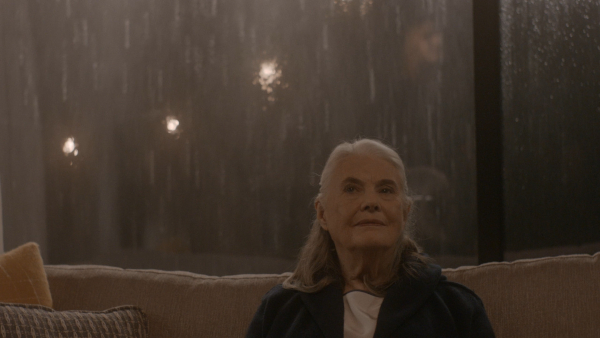
Majorie Prime (Michael Almereyda, 2017). Majorie Prime started life as a play written by Jordan Harrison that was first produced in 2014. Set in a not-too-distant future, the story centers on the use of machine-learning technology to create hologram simulacrums of loved ones. These figures might be used to preserve memories, soothe grief after a loss, or generally fortify the family unit. The material’s stage origins show up in dialogue that is sometimes frightfully stilted. To be clear, I’m leveling this criticism only at those lines uttered by characters who have no programming-based excuse for sounding like they’re reading from an erudite author’s stab at science fiction. Every actor charged with rendering that dialogue is defeated by a line at least once. Michael Almereyda’s directing is clean enough but also sometimes too fussy, as if he’s straining to impose a sense of grand cinema on what ultimately plays better when it’s small and intimate. Flawed as the film is, it still holds and contends with interesting ideas about how memory works and how it can be reshaped for good or ill. Lois Smith, playing a role she originated on stage, is terrific here. She layers in a much-needed sense of fragile humanity.
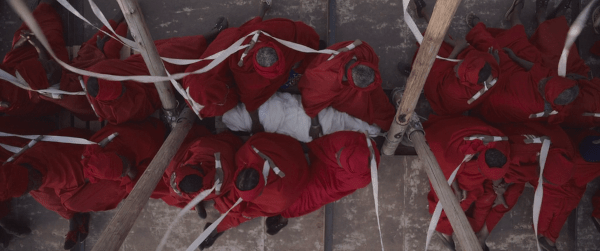
I Am Not a Witch (Rungano Nyoni, 2017). The debut feature from Zambian wrier-director Rungano Nyoni is astonishing. Set in an unnamed African land, I Am Not a Witch follows a young girl (Maggie Mulubwa) who wanders into a village and is immediately beset by allegations. She is a witch, the authorities cry, and she is sent to live with outcast women who are tethered by long, white ribbons. With a hot-ember intensity and a mordant wit, the film considers the cruel folly of patriarchal cultures. The repression meted out by government officials exists side by side with their own buffoonish corruption. The girl, dubbed Shula by her new cohorts and caretakers, is a grim witness to all this even as she’s eventually exploited by the same system that originally persecuted her, her difference damnable until it proves useful. Nyoni’s visual sense is incredible. Working with cinematographer David Gallego, she shapes a whole word that is engrossing and consistently striking. Every scene is a effective solicitation that lures the viewer into a deep need to understand more. This is a stridently assured beginning in film, the announcement of a great talent.
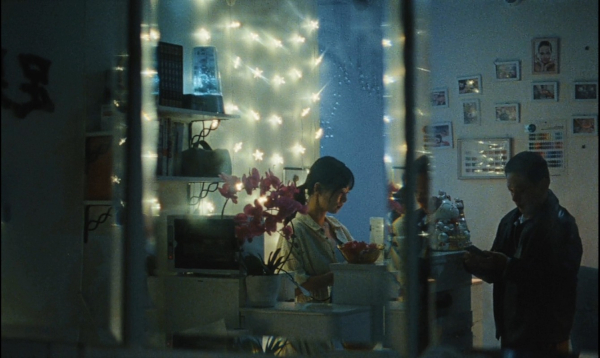
Blue Sun Palace (Constance Tsang, 2024). Men are sure broken little beasts. In writer-director Constance Tsang’s feature debut one of those men is Cheung (Lee Kang Sheng), a Taiwanese expat in New York City. He frequents a Chinatown massage parlor where Amy (Ke-Xi Wu) and Didi (Haixpeng Xu) work, and his interest in the women drifts beyond the strictly professional. Tsang uses these relationships to examine the thin line between need-driven appreciation and nasty possession, a theme that is reinforced by other interactions the women endure. Wu is especially good at showing how these moments leave a deep, lasting impression on her character. Tsang’s directing is alert to its environments. It would require going back to the early nineteen-eighties to find depictions of New York City spaces that look so small and squalid. I could have used a little more plot in the delicate balance between story and mood, but this is overall an impressive debut. It’s hypnotic and disconcerting at the same time.
Discover more from Coffee for Two
Subscribe to get the latest posts sent to your email.

