It’s some real dirty pool for Pixar to pick the most emotionally devastating scene from the Toy Story series and then build a whole movie around it. The saga of sentient playthings launched the computer animation studio into feature films and has now stretched for decades of returns that diminished only gradually. Even coming from a studio with a nearly nefarious expertise in incorporating heart-rending drama into family entertainment, the various Toy Story entries reach levels of such punch-in-the-feels potency that cast members themselves are left marveling over it years later. I genuinely believe nothing in the canon can match the sequence in Toy Story 2 that features the Randy Newman–penned song “When She Loved Me” as intoned by Sarah McLachlan with the same wounding resonance that led to a jillion animal adoptions.
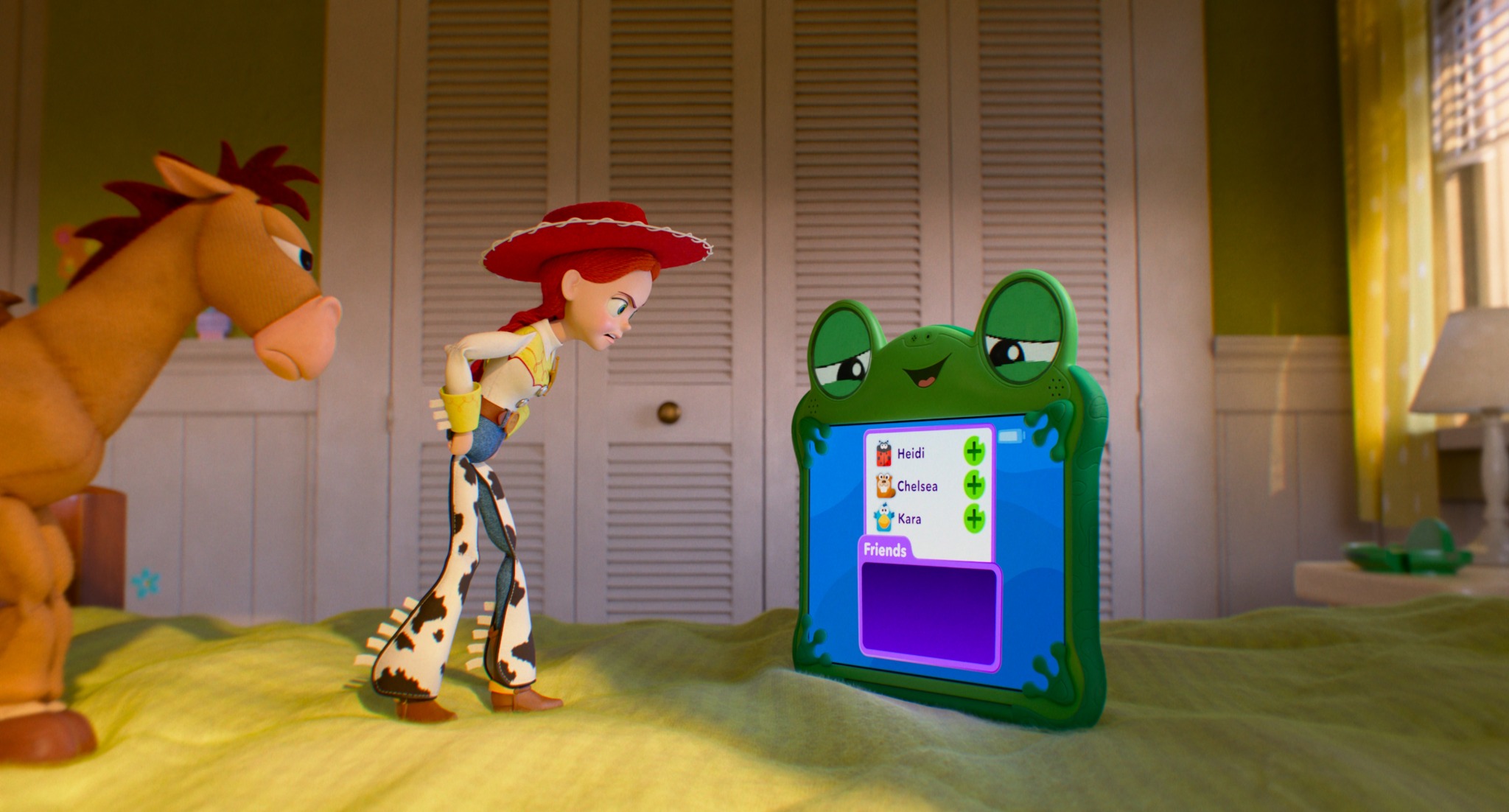
Toy Story 5 brings back all of the familiar characters from the previous films, but it is primarily concerned with Jessie (voiced marvelously by Joan Cusack), the feisty cowgirl whose sorrow at being abandoned by the first child who loved her drove that earlier scene. In the social structure of the toys owned by Bonnie (Scarlett Spears), Jessie is the clear leader. She is intense about the well-being of Bonnie and is concerned that the painfully shy youngster is having trouble making friends. That worry is shared by Bonnie’s parents (Lori Alan and Jay Hernandez). Their solution is to gift Bonnie the kid-friendly tablet that dominates the attention of all of her classmates. The frog-themed device is called Lilypad (Greta Lee) and, just like the arrival of the little punk in a rocket all those years ago, the newcomer stirs chaos in the community.
Andrew Stanton has had a writing credit on every preceding Toy Story, but this is his first outing as a director in the series (Kenna Harris is listed as co-director). The film’s sidelong criticism of technology gives it some kinship with Stanton’s WALL-E, which some consider to be Pixar’s high-water mark. Both films depict the citizenry benumbed by the glowing screens in front of them. No matter that his employer is basically a tech company, Stanton basically argues that relationships built on analog interactions are better.
Like its immediate predecessor, Toy Story 5 is sturdy and yet noticeably less inspired than the first three films made from Pixar’s flagship title. It’s amusing more than outright funny, and some of the gags — notably those built around a fleet of Buzz Lightyears (all voiced by Tim Allen, of course) who haven’t yet realized that they’re toys — feel like retreads. What does work is Jessie’s story, and it really, really works. The filmmakers circle back to the character’s beginnings in the film series in a way that’s immensely satisfying. Maybe it’s a little manipulative, too. But, hey, sometimes play is most enjoyable when it’s done with big, broad emotions.
Discover more from Coffee for Two
Subscribe to get the latest posts sent to your email.

