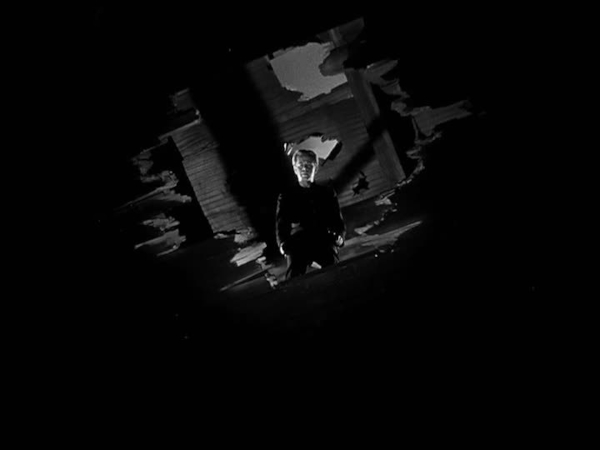
Berlin Express (Jacques Tourneur, 1948). A bomb goes off on a train traveling from Paris to Frankfurt while Europe is still feeling the aftershocks of World War II, and a collection of travelers from different nations determine that the incident is part of a scheme to disrupt a peace process. After a related kidnapping occurs at the German train station, the assembled strangers band together to solve the crime. Berlin Express is delightfully effective when it plays like an especially effervescent combination of post-war espionage and wily whodunnit. It stiffens up when it seeks to educate, especially when resorting to dense narration that’s delivered with dull authority by Paul Stewart. That noted, the voiceover does occasionally enhance the film, most notably in a scene that catalogs which characters are in individual train cars. That sequence basically forecasts the charming formality of Wes Anderson. Director Jacques Tourneur alternates the visuals between Hollywood crispness and film-noir foreboding, the latter aided immeasurably by the cinematography of Lucien Ballard.
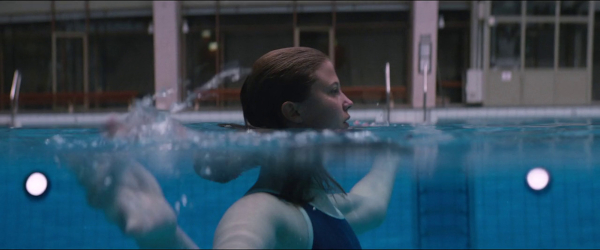
Thelma (Joachim Trier, 2017). It’s fascinating to see Joachim Trier bring his impeccable visual sense and devotion to deep, tightly focused character building into the realm of a horror film. Thelma (Eili Harboe) is a college student in Oslo who grew up in a deeply religious household. Finally out on her own, she gradually tests herself in social settings, clearly longing for personal connection. Her ability to bond with her peers is significantly complicated by both the seizures that come upon her unexpectedly and the sense that maybe these attacks are connected to some troubling incidents in her past. Most of the set pieces meant to unnerve (an enclosed swimming pool, a disappearing infant) are strikingly effective, and Trier and his regular co-screenwriter, Eskil Vogt, bring trademark depth to the storytelling. Harboe is very good in the title role. She plays the character’s outsider qualities with an empathy for the pain and uncertainty that underlie them.

Lorne (Morgan Neville, 2026). Morgan Neville produced the the series of hyper-focused, hour-long documentaries put out last year to coincide with the fiftieth anniversary of Saturday Night Live, but he saved the big cheese for himself. Lorne Michaels created the program a half-century ago and presided over it for most of its run, expanding his influence into other corners of showbiz along the way. There’s an awful lot of ground to cover in Lorne, and Neville balances all the lore as effectively as anyone could. He gets ample behind-the-scenes footage, uses the video archive judiciously, and assembles a solid batch of SNL family members for casually amused and informative interviews. The documentary falters when Neville gets a little too cute in the construction, and the conceit of Lorne Michaels as defiantly unknowable doesn’t really hold up to scrutiny. Even so, the film works as a dual history of Michaels and the television powerhouse he’s presided over, bringing just enough fresh perspectives to details that are deeply familiar to most comedy nerds.
Discover more from Coffee for Two
Subscribe to get the latest posts sent to your email.

