
Caught Stealing (Darren Aronofsky, 2025). Hank Thompson (Austin Butler) is a former baseball phenom who’s reduced to working in a New York City dive bar and living in a rattrap apartment following a career-ending injury. He squabbles with his neighbors, maintains a precarious relationship with his girlfriend (Zoë Kravitz), and generally nurses his bitterness. After unwillingly taking on the task of looking after the pet cat of a punk neighbor (Matt Smith), Hank winds up in the middle of thug warfare over a pile of stolen cash. Charlie Huston adapted his own 2004 novel, and the script freely borrows the sweaty intensity and jagged urban edges of vintage Scorsese as Hank careens through the city with various adversaries so close behind that they’re practically scraping his heels. As he’s prone to do, director Darren Aronofsky occasionally gets in his own way here. There are a couple over-directed moments, and the tricky tonal balance sometimes gets away from him. Overall, though, this is a effective thriller with a handful of strong performances (in addition to the first-rate work by Butler and Kravitz, Vincent D’Onofrio has a nice turn as a Hasidic brute). For all its flaws, Caught Stealing is probably Aronofsky’s best movie since Pi.

52 Pick-Up (John Frankenheimer, 1986). 52 Pick-Up is a potent slice of eighties sleaze. The plotting in this Elmore Leonard adaptation (with the author himself co-credited on the screenplay) is very solid, especially in depicting how easy it is to turn crooks against each other. Harry Mitchell (Roy Scheider) is the owner of a successful construction company, and his wife (Ann-Margret) is a figure in local politics who is in the midst of an election campaign. It’s that run for office that prompts a set of opportunistic toughs to blackmail Harry using a batch of videos of him with his much-younger mistress (Kelly Preston). In terms of visuals and basic narrative mechanics, John Frankenheimer’s direction is often impressive. The rest of his approach is problematic. Much of the acting is pitched too hot, and the music score is overbearing. The strongest screen versions of Leonard’s work have a confident cool about them. This film is all angry anxiety, and it fizzles out before it’s done.
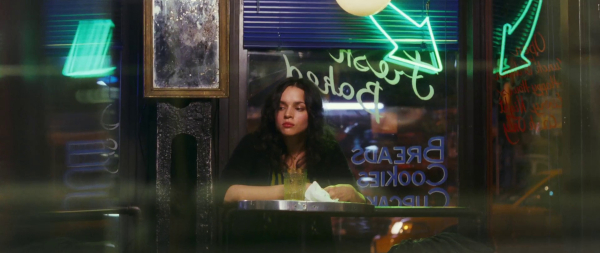
My Blueberry Nights (Wong Kar-Wai, 2007). The first English-language feature from director Wong Kar-Wai follows Elizabeth (Norah Jones), a melancholy young woman who responds to a breakup by roaming around the country in search of reinvention. She encounters other unmoored souls along the way, including a brassy gambler (Natalie Portman) and a boozy cop (David Strathairn) pining after his ex-wife (Rachel Weisz). My Blueberry Nights plays out like a softer batch of vignettes concocted by Sam Shepard or Jim Jarmusch, the sort that are populated by emotionally wounded individuals skittering around on the fringes of society. Rather than downbeat realism, Wong presents the drama with a mildly stylized feel. Per usual, Wong shapes several striking visual moments in the film. He also drastically overuses an especially twitchy version of slow motion throughout. Jones holds her own in the lead role, which is mightily impressive given the formidable cast. In addition to the actors already mentioned, the film makes room for Jude Law at his most ludicrously charismatic. The film’s strongest performance belongs to Portman, who clearly relishes the complex character work required for her role.
Discover more from Coffee for Two
Subscribe to get the latest posts sent to your email.

