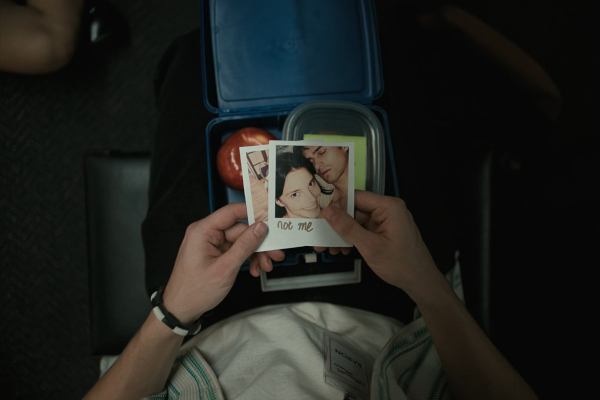
Obsession (Curry Barker, 2026). I think it’s terrific that a wholly original film became such a sensation, and it’s especially thrilling to see a younger generation of moviegoers sparked to meaty conversations about the layers of meaning they perceive in a cinematic narrative. I will also gladly join the still-growing chorus singing the praises of Inde Navarrette, who is impressively all in with her lead performance in this twisty horror film. Otherwise, I’m sorry to say that Obsession just isn’t very good. The film follows a lovelorn sad sack nicknamed Bear (Michael Johnston). He’s nursing a longstanding crush on his friend and coworker Nikki (Navarrette). Unable to profess his romantic interest, even when given a clear invitation to do so, Bear accidentally taps into mystic forces with a novelty item called a One Wish Willow to make Nikki helplessly in thrall to him. Written and directed by Curry Barker, the film is far too muddled in its ideas to be effective. Sometimes Nikki seems to represent the crazy, possessive girlfriend trope, sometimes she’s clearly positioned as the victim of a controlling man in a flimsy nice guy costume, and sometimes she’s a generic horror villain. The film touches on themes of codependency without really having the psychological depth to go beneath the surface of the ideas introduced. Defter storytelling might make this indecisiveness into intriguing ambiguity. Instead, Barker doesn’t seem to know what he wants to say. The characterizations are thin, performances other than Navarette’s are generally subpar, and there are multiple clunky patches in the plotting.

We’re No Angels (Michael Curtiz, 1955). Under the skilled direction of Michael Curtiz, We’re No Angels is a warm and funny comedy. In the late eighteen-hundred, Joseph (Humphrey Bogart), Albert (Aldo Ray), and Jules (Peter Ustinov) are escaped convicts in French Guiana who stop in a village to regroup before putting more distance between them and the prison. They find a store and intend to rob it. Before they can commit the nefarious act, they get drawn into the lives of the family that runs the store. The trio are particularly motivated to help the beleaguered shopkeepers when the business’s imperious owner (Basil Rathbone) pays a visit with his equally unpleasant nephew (John Baer). Ranald MacDougall’s screenplay (adapting a stage play by Albert Husson) adeptly plays the three archetypal criminal characters off one another and exploits the amusing friction that comes from watching tough guys accede to their nobler instincts as a form of domestication. Until the ridiculous ending that was surely the result of acquiescing to the Production Code that demanded criminals must face consequences, We’re No Angels is consistently winning.

Cat People (Paul Schrader, 1982). Irena Gallier (Nastassja Kinski) travels to New Orleans to be reunited with her long-lost brother, Paul (Malcolm McDowell). After an unhappy childhood in foster homes, Irena is shy and withdrawn. She clearly hopes for a new beginning now that’s she found her family, but there are some creepy vibes in the house. The local zoo beckons to her, and Irena is soon employed in the gift shop and being romanced by Oliver (John Heard), one of the lead zoologists. She also seems very interested in the panther who paces in one of the cages. Paul Schrader’s stylish remake of Cat People, the 1942 horror classic about humans who transform into dangerous predators when their passion rises, is speckled with plot problems. Too many character decisions stem from narrative needs rather than internal logic and established motivations. Even so, the film mixes swagger and sizzle just well enough. It’s engaging even when it’s implausible. Kinski is strong in the lead role, especially in the earlier scenes as she uncertainly takes in her new surroundings.
Discover more from Coffee for Two
Subscribe to get the latest posts sent to your email.

