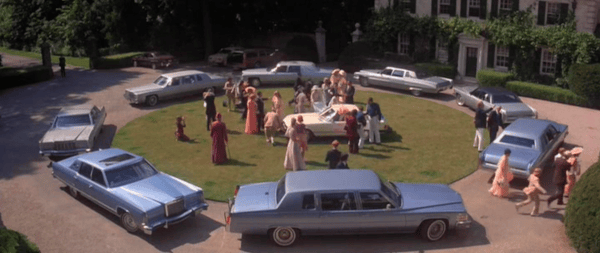
A Wedding (Robert Altman, 1978). There might have been no more natural milieu for Robert Altman to unfold one of his trademark social satires packed with overlapping storylines than a posh, American wedding. Altman is credited with three other writers on the screenplay that traces the monumental messiness occurring around the nuptials of Dino Corelli (Desi Arnaz Jr.) and Muffin Brenner (Amy Stryker). I dare not try to recount the myriad story lines that run through the film. It suffices to note that Altman and his collaborators are most compelling when they undergird the mayhem with astute observations about how class differences introduce complications to a high-stress endeavor that involves formally intertwining families. Altman’s patented sprawl sometimes gets away from him here. There are comic digressions that peter out and plot threads that hang like tassels. It’s fun to watch Howard Duff saunter through scenes as a boozy, disgruntled doctor and Mia Farrow exude weirdo intensity as a member of the bride’s family. Paul Dooley and Carol Burnett give the strongest performances in A Wedding, though I suppose the latter’s work is undercut by the amusing distraction of one moment where she goes full Eunice.
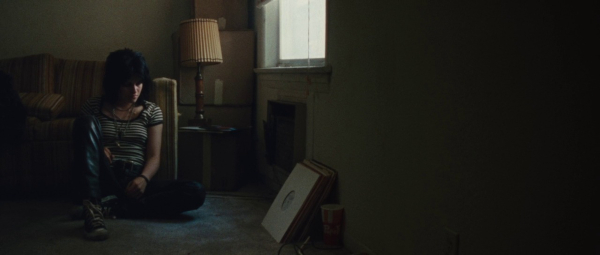
The Runaways (Floria Sigismondi, 2010). Writer-director Floria Sigismondi bases this music biopic on Neon Angel, the memoir Cheri Currie wrote about her time as the lead singer for the Runaways. The band was peddled to the masses by leaning heavily on the novelty — for the late nineteen-seventies — of a rock outfit with all females on the roster. The Runaways were sensational without the gimmick, and Sigismondi captures the headlong energy of the fierce, punk-adjacent rock band. The Runaways is satisfying when it sticks close with the group, moving through their origins, fast rise, and interpersonal tumult. Even when those plot beats lean toward tropes, it’s effective because of the energy of the performances — particularly Dakota Fanning as Currie, Kristen Stewart as guitarist Joan Jett, and, in a smaller role, Stella Maeve as drummer Sandy West — and the well-constructed visuals of director Sigismondi. Anytime the film dips into outside family drama, the scenes feels extraneous. The oily machinations of manager Kim Fowley grow tiresome because the character has been conceived as a cartoonish villain, an interpretation Michael Shannon embraces with committed overacting.
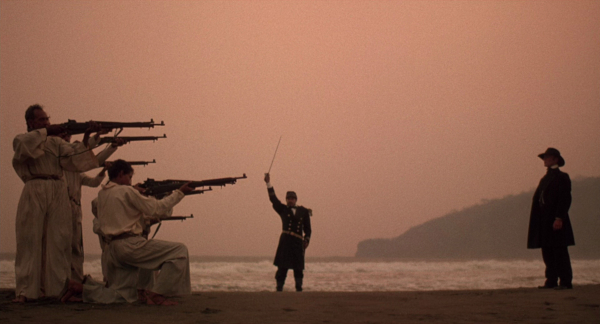
Walker (Alex Cox, 1987). Holy moly, what a mess! Director Alex Cox delivers an angry screed in opposition to disastrous U.S. interventionism in Nicaragua — very much a hot topic at the time of the film’s release — in the form of a historical epic set more than a century earlier. In the middle of the eighteen-hundreds, William Walker (Ed Harris) is recruited by Cornelius Vanderbilt (Peter Boyle) to provide support to one side in a civil war taking place in Nicaragua. Walker assembles a group of morally dubious mercenaries and runs roughshod across the country. Cox underlines the parallels between the different eras of imperialistic meddling by including of anachronistic details (such as a scene where characters in the nineteenth century read issues of modern news magazines) and then draws one more sharp line beneath that argument with a video montage accompanying the closing credits. It’s embarrassingly dumb. Walker has the exploding-blood-capsule violence of prime Peckinpah and a deadpan absurdity that’s too clumsy to be effective. A cast of character actors compete to see who can give the most wildly overheated performance. Boyle wins, but René Auberjonois gives him a run for his money. A few of Cox’s shots are admittedly striking, and the Joe Strummer score is nicely novel. Those small attributes can’t salvage a film this misbegotten.
Discover more from Coffee for Two
Subscribe to get the latest posts sent to your email.

