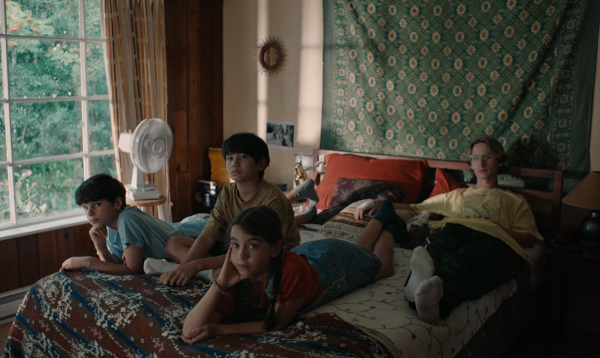
Blue Heron (Sophy Romvari, 2026). The feature debut from writer-director Sophy Romvari is thrilling in its artistic ingenuity. Blue Heron is about the faultiness of memory and the ways wounded families never quite heal. A family of Hungarian immigrants moves to Vancouver Island in the nineteen-nineties. In quiet, meticulous scenes, the film depicts the challenges faced by the family with the fragmentary elusiveness of memory. It gradually becomes clear that the main troubles come from the eldest son (Edik Beddoes), who is dealing with some level of mental-health issues. In the early going, the film is reminiscent of Annie Baker’s marvelous Janet Planet. Then, Romvari spins off in inspired new directions that simultaneously enhance and complicate the narrative. She uses the tools of cinema so inventively that it becomes clear that her ideas couldn’t be properly expressed in any other medium. It’s a daring, striking, and haunting film.
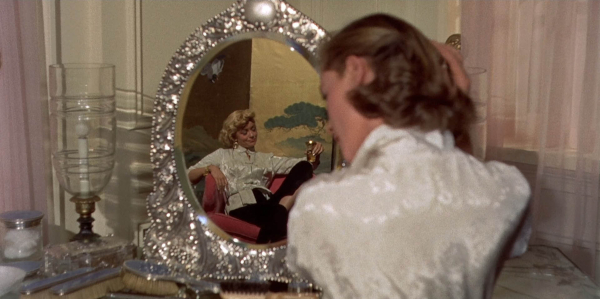
Written on the Wind (Douglas Sirk, 1956). Adapted from a Robert Wilder novel first published nearly a decade earlier, Written on the Wind is about the Hadley family, Texans who are poisoned by the wealth earned in the oil business. Kyle Hadley (Robert Stack) uses booze to combate the pressure he feels to live up to the demands of his tycoon father (Robert Keith), and his sister, Marylee (Dorothy Malone), freely uses everyone who comes into her orbit as an emotional plaything. Among the people who get tangled into the branches of this knotted family tree are Mitch (Rock Hudson), a longtime chum of Kyle’s who now works at the oil company, and Lucy (Lauren Bacall), who is wooed by Kyle in record speed and becomes his wife. Furiously, floridly melodramatic in all the right ways, Douglas Sirk’s film packs in season’s worth of soap opera into a tight and tidy ninety-nine minutes. Bacall puts her tightly contained emotions to good use, Hudson finds his character’s veiled inner conflict, and Stack is good at playing drunk and exceptional at playing hungover. The movie is absolutely owned by Dorothy Malone, though. She’s a femme fatale with no interest whatsoever in disguising her cunning, and she wields the dialogue in George Zuckerman’s script like so many branding irons.
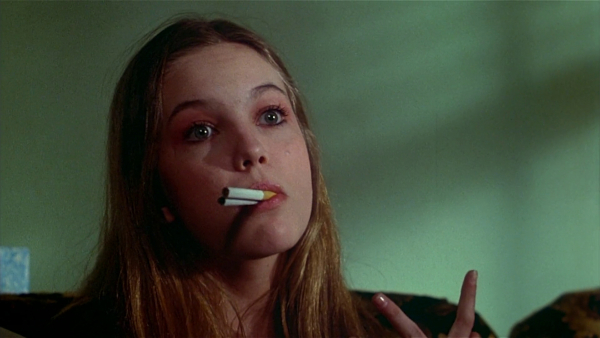
Ladies and Gentlemen, the Fabulous Stains (Lou Adler, 1982). Diane Lane, still a young teenager when the film was made, is utterly magnetic as Corinne Burns, who channels her anger and angst into a gig as the lead singer of a punk band that transcends their prefabricated origins to inspire a movement of feminist fury. Every bit of the film that locks in with the Stains themselves is terrific. The trajectory of the band’s popularity is believable and thrilling. Aside from that, Ladies and Gentlemen, the Fabulous Stains includes a little too much contemplation of rock-star woes apart from our starring trio (Laura Dern and Marin Kanter play the other two Stains band members), and there’s at least one plot turn, mercifully brief, that feels uncomfortably skeezy now. Lou Adler directs the film ably enough. He does deserve extra credit for a bit at the end, filmed well after the other material in the film, that perfectly apes the early-MTV music video aesthetic. It’s a particularly impressive feat given that the music channel debuted only a little more than a year before the movie’s release.
Discover more from Coffee for Two
Subscribe to get the latest posts sent to your email.

