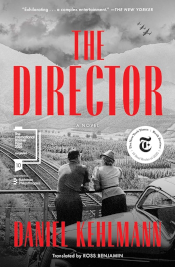
The Director by Daniel Kehlmann (translated by Ross Benjamin)
Fiction, 2023
He stopped, walked on, and stopped again, feeling so weak that he had to lean against the wall of a house. As he looked around, the edges of the houses seemed askew; under the streetlamps fell sharply delineated shadows, darker than black; and while the street down below rolled away very straight into an endless distance, a chimney up above thrust itself into an oversize moon. This was how films had looked fifteen years earlier, and strangely enough this thought soothed him so much that he was able to walk on until at last he found his hotel.
This novel uses the real story of G. W. Pabst, a Austrian film director whose failed dalliance with Hollywood landed him back in Europe when World War II gets underway. He made movies within the dark tent of Nazi propaganda efforts, including a drama about a violinist that was lost in the tumult the resulted as the Allies started to prevail. Pabst is at the center, but the plot moves freely back and forth among perspectives of a range of characters.
Daniel Kehlmann, a German author, writes with insight and empathy. He doesn’t judge his characters even as he reckons with the ugliest stretch of his nation’s past. The storytelling is fleet and yet deep. Kehlmann burrows into the characters’ psyches to properly convey their conflicts, confusion, strain, and sorrow. The Director is awash in history without feeling burdened by details, which are amassed so comprehensively that the prose could easily become stultifying. Instead, the novel feels properly lived in, like a tale conveyed from memory rather than researched invention.
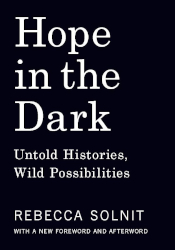
Hope in the Dark by Rebecca Solnit
Nonfiction, updated edition published 2016
Effects are not proportionate to causes—not only because huge causes sometimes seem to have little effect, but because tiny ones occasionally have huge consequences. Gandhi said, “First they ignore you. Then they laugh at you. Then they fight you. Then you win.” But those stages unfold slowly. And as the law of unexpected activist consequences might lead you to expect, the abolition movement also sparked the first widespread women’s movement, which took about the same amount of time to secure the vote for American women, has achieved more in the subsequent eighty-four years, and is by no means done. Activism is not a journey to the corner store, it is a plunge into the unknown. The future is always dark.
Hope in Dark was first published in the midst of George W. Bush administration, and this slightly updated version came out around six months before the catastrophic results of the 2016 U.S presidential election, not to mention the devastating encore of that particular federal blemish that still infects the nation as I type this. Although Rebecca Solnit is predominantly interested in learning from history rather than litigating the present, there’s still a remarkable gap between her consideration of the worst the country to endure and the pending corrupt leadership she couldn’t quite imagine.
In the end, though, Solnit’s main thesis is strong enough to level up to meet the more harrowing challenges of today. The slim volume offers a forceful reassertion of the foundational United States premise that people have the power, and the systems — faulty as they might be — are in fact built to respond to democracy and repel authoritarianism. The other lesson, vitally important to keep in mind as the blue-tsunami elected official move into their leadership roles, is that the most meaningful, lasting change happens incrementally rather than in big, dramatic swoops. Now is not the time to relent on exerting pressure towards much-needed change, but patience is also called for.
Discover more from Coffee for Two
Subscribe to get the latest posts sent to your email.

