Since great television comedy always begins with the script, this series of posts considers the individual episodes that have claimed the Primetime Emmy Award for Outstanding Writing for a Comedy Series over the years.
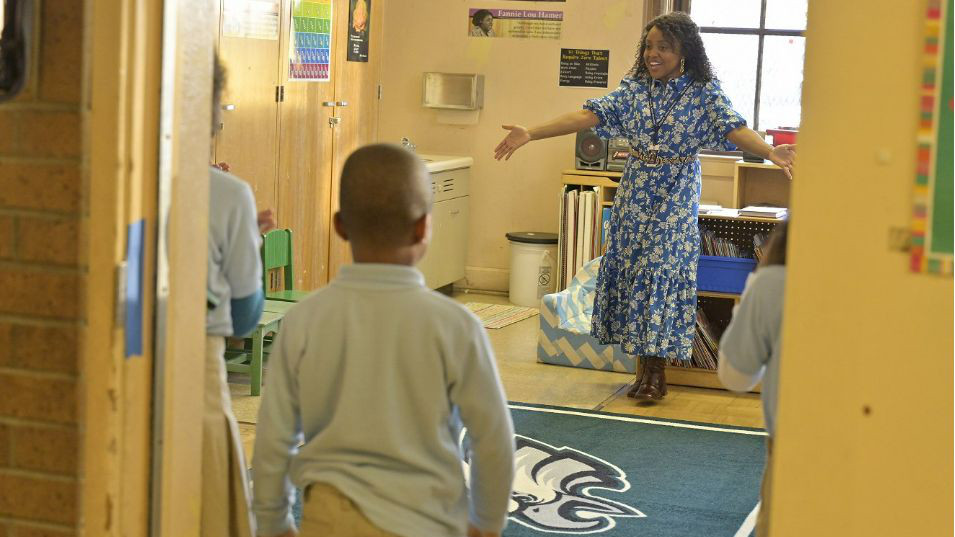
“Philadelphia gets a bad rap,” Quinta Brunson told The Guardian last year. “Like there’s a lot of violence, a lot of poverty — and these things are true — but I just wanted to offer a different depiction. One that shows the people who are there, who get by day by day, because I appreciate the resilience in humans, period.”
It’s a measure of the success of the pilot episode of Abbott Elementary, the sitcom Brunson created to help her fulfill that stated goal, that the thesis of enduring positivity in the face of hardship is immediately understood. In the tight twenty-two minutes afforded for an episode filling a half-hour block of broadcast network programming, Brunson lays out wry examples of the procession of indignities that public school teachers routinely face and the dispiriting lack of resources to help implement needed fixes. In the end, though, the camaraderie and resourcefulness of the staff wins out. Solutions might not be provided, but they can be made.
Abbott Elementary is structured in the mockumentary format popularized by The Office and then bettered by Parks and Recreation. It’s the latter series that’s most informative in understanding why Abbott Elementary works as well as it does. Janine Teagues, the lead character Brunson writes for herself to play, is a temperamental partner to Leslie Knope, the role played winningly by Amy Poehler in Parks and Recreation. Both characters take pride and pleasure in the act of serving their respective communities. Although they can fall prey to doubts, the firmly determined women persevere on the inner certainty that there is value in what they do for their fellow citizens every day.
Beyond establishing the overall message of the show, the Abbott Elementary pilot is an effective introduction of what’s to come on the series. Taking full advantage of the documentary conceit to clearly introduce the characters and setting, Brunson skillfully makes every last person on screen distinctive. Deploying familiar sitcom archetypes with shrewd twists, Brunson deeply invests personality across the range of people working at the school. She’s talked a lot about honoring the approachability of classic network sitcoms that allowed the most casual viewer to quickly grasp the totality of the show. In the streaming, binging era of multi-episode, incremental storytelling, creating under that once ubiquitous strategy is almost a lost art. In Brunson’s expertly crafted script, that it is an art worth rediscovering is hard to deny.
Other posts in this series can be found at the “Golden Words” tag.
Discover more from Coffee for Two
Subscribe to get the latest posts sent to your email.
 Coffee for Two