
Wicked Little Letters (Thea Sharrock, 2024). Based on a true story — ever so loosely, I assume — Wicked Little Letters traces the scandal that builds in a provincial British town, in the nineteen-twenties, when middle-aged, noted-churchgoer Edith (Olivia Colman) receives a string of lewdly threatening letters that were mailed anonymously. Suspicion quickly falls on her neighbor Rose (Jessie Buckley), a Irishwoman and single mother who recently moved to the community. The narrative moves with fairly predictable beats, but Thea Sharrock directs with just enough raucous spunk to trundle over the flaws. Both Colman and Buckley are enjoyable in the roles, with the latter tapping into an especially potent form of brash onscreen charisma. The film’s points about the societal impediments to female independence are simultaneously too soft and leadenly explicit, which blunts the thematic resonance. Wicked Little Letters is entertaining without having the heft that it could and should.
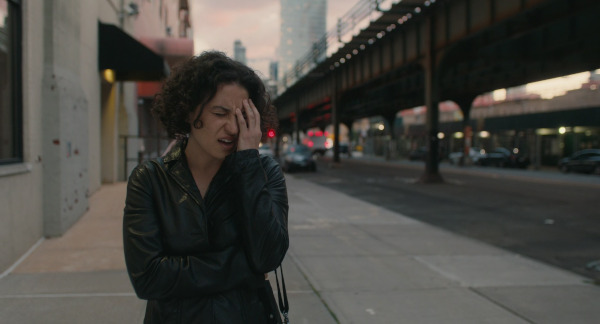
Babes (Pamela Adlon, 2024). Pamela Adlon proved herself to be an emotionally sensitive, visually inventive director on Better Things, her standout television series. If her feature directorial debut, Babes, doesn’t quite have the same enthralling artfulness, it maintains her empathetic sensibility and fearless, feminist wit. Ilana Glazer co-wrote the script and plays the lead role of Eden, a thirty-something New Yorker who runs a yoga studio out of her apartment and generally moves through life with cavalier bravado. After some whirlwind canoodling with a genial actor (Stephan James), Eden finds herself pregnant. She decided to have the baby, despite a twist of fate that means she’ll be a single mother. Babes gets a lot of comic oxygen out of the often-disguised physical and emotional tumult of pregnancy, and Glazer is characteristically committed to the confrontational truth of each messy moment. Adlon moves deftly between the broad and ragged poignancy, keeping her storytelling specific and personal. It’s a promising beginning to what deserves to be an era of crafting cinema that is as long and prolific as she wants it to be.

I Saw the TV Glow (Jane Schoenbrun, 2024). Writer-director Jane Schoenbrun’s third feature metaphorically dramatizes the experience of a trans individual realizing that who they are doesn’t correspond to the gender identity imposed on them. In the manner of much of the greatest fiction, the passionate specificity of Schoenbrun’s approach makes the story more universal. It’s essentially a stand-in for any number of outsider experiences. In the film, Owen (played primarily by Justice Smith, with Ian Foreman handling the character in his younger years) is a miserable, lonely kid who becomes intrigued by a slightly older girl name Maddy (Brigette Lundy-Paine). Maddy and her friends obsess over a television program called The Pink Opaque (which is clearly inspired by Buffy the Vampire Slayer, right down to the font in the credits), and so Owen adopts that fixation, too. From there, Schoenbrun explores codependent relationships, myopic fandom, the twisted perception of nostalgia, and the peril of hitching one’s whole identity to external entities. Schoenbrun favors immaculately composed, dreamlike visuals, which serve to make a narrative built on fervor comes across as all the more intense. I Saw the TV Glow might get a little tangled in its own defiant weirdness, but the purity of its emotions never flags.
Discover more from Coffee for Two
Subscribe to get the latest posts sent to your email.
 Coffee for Two