
The Smashing Machine (Benny Safdie, 2025). This biopic is about Mark Kerr, played here by Dwayne Johnson. Kerr was an MMA fighter whose career began in the late nineteen-nineties and lasted about a decade. The Smashing Machine is a descendant of Darren Aronofsky’s The Wrestler in all its leaden, judgmental misery. Writer-director Benny Safdie dwells on the brutality of Kerr’s chosen sport and the most awful circumstances of his life outside the arena, including a destructive relationship with his girlfriend Dawn (Emily Blunt, vividly overdoing it). Basing a film on true events doesn’t obligate a director to focus on only the most cliched elements of a person’s life story, but that’s exactly what Safdie does. Every beat of the film is completely familiar from a bevy of other screen stories about athletes who work with their fists. What’s worse is that the storytelling is repetitive to the point of numbing boredom. Johnson gives a nice performance in the leading role, but he’s stranded.
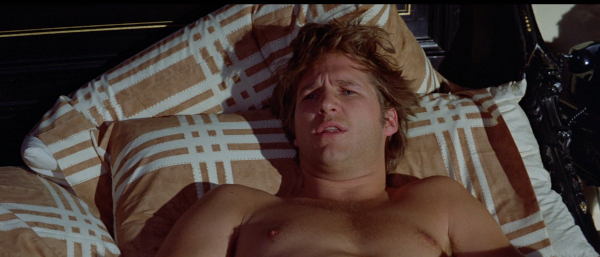
Winter Kills (William Richert, 1979). I’d long heard this movie was an amazing gonzo mess, and I’m delighted to report that it lived up to that reputation. Representing the caboose of the long train of paranoid political thrillers that ruled the nineteen-seventies, Winter Kills goes right for the big magilla: the JFK assassination. Nick Kegan (Jeff Bridges) is one of the sons of a wealthy American power broker (John Huston, oozing amorality). Two decades earlier, Nick’s half-brother (John Warner) was serving as the U.S. president when he was assassinated. Nick bumbles into a investigation of the circumstances around his famous sibling’s murder and discovers a vast, complicated conspiracy. The fictionalization is light and sometimes laughably facile, as when Jack Ruby is reimagined as a character named Joe Diamond (played with cheerful disinterest by Eli Wallach). Bridges spends a sizable amount of the movie confronting alarming information with the basic demeanor of a sheepdog puzzled by his own reflection. Director William Richert also wrote the screenplay, adapting it from a Richard Condon novel. The tone is so slippery that some adherents claim the film is satirical. That strikes me as a generous assessment. Winter Kills is woefully confused, tripping over its own quadruple-knotted shoelaces. Still, the commitment to its own lunacy makes the film oddly compelling. I can’t claim this movie is good (and it’s stunningly chauvinistic), but I sure had fun watching it.

Sirāt (Oliver Laxe, 2025). A rave takes place in the Moroccan desert. Speakers are assembled into a formidable wall that blares beats off the landscape as sweaty revelers swirl and bend. Into this scene shambles Luis (Sergi López) with his young son (Bruno Núñez Arjona) in tow. Luis is in a desperate search for his missing daughter, believing she’s gotten lost within this subculture of nomadic hedonism. After the first party breaks up, Luis pleads his way into joining a caravan of people traveling to the next rave. The group face a multitude of harrowing tests as they cross the desolate terrain, and Sirāt gradually takes on the feel of a dystopian drama focused on the fragile shaping of a makeshift society. Director Oliver Laxe (who shares a screenplay credit with Santiago Fillol) keeps his storytelling just ambiguous enough that the film is open to any number of interpretations when hunting for metaphor. That inclusiveness of ideas is purposeful, an allowance for the vast messiness of life. Sirāt boasts incredible sound design, inventive directing, and a very strong performance by López. It’s a tremendous piece of work.
Discover more from Coffee for Two
Subscribe to get the latest posts sent to your email.

