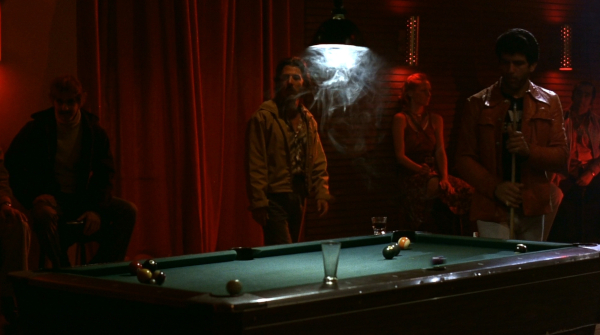
Straight Time (Ulu Grosbard, 1978). The nineteen-seventies seediness is strong with this one. Dustin Hoffman plays Max Dembo, a lifelong crook who gets out of prison after serving a multi-year sentence. He initially makes an effort to abide by the expectation that he lead a reformed life on the outside, but he eventually caves to the pressure that comes from operating in a society that doesn’t know how to accommodate someone like him. Straight Time is more compelling in its first half, when it’s concerned with the casual dehumanization of the formerly incarcerated. To that end, M. Emmet Walsh gives a exceptional performance of genial hostility as a parole officer. In the second half, the film turns into more a conventional, if low-level, crime story, and the cracks in the narrative start to show. Ulu Grosbard’s direction is strong and often quietly inventive. I’m partial to a shot where the camera briefly jolts upwards to track Max swiping a shotgun off a pawn shop wall. Adapted from a novel by Edward Bunker, the film follows through on the grimness of its story all the way to an ending that is sedate and appropriately rueful.
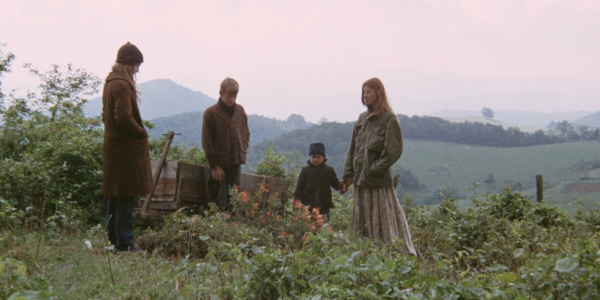
Where the Lilies Bloom (William A. Graham, 1974). This film is a generally effective family drama that sometimes falters in its more broadly comedic passages. Those stretches skew antic, goosed along by the bouncy banjo music of Earl Scruggs. Earl Hamner Jr., the creator of The Waltons, adapts a 1969 novel by Bill and Vera Cleaver that traces the challenges faced by the Luther family, who live in poverty in Appalachian North Carolina. The strain faced by the clan is compounded by the death of their father (Rance Howard, very good in a brief role). The siblings keep the loss a secret from the rest of the community, fearful that the family will be split apart. Although there are a few professionals in the cast, director William A. Graham also used locals for the sake of authenticity, so some some of the acting is awkward and stiff. The details are smartly conceived, and the storytelling is warm and earnest. Where the Lilies Bloom includes nice performances by Harry Dean Stanton, Jan Smithers, and, in her only screen appearance, Julie Gholson.
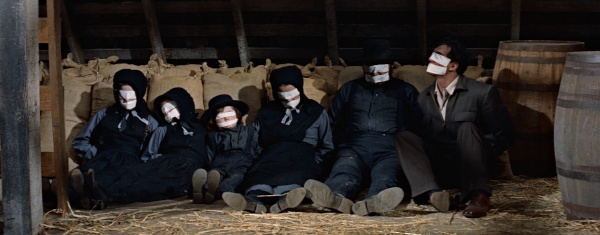
Violent Saturday (Richard Fleischer, 1955). This movie has it at all: a miserable bank manager who spends his evenings peeping in windows, a desperate librarian who turns to crime, scheming bank robbers, a cuckolded mining magnate on the sauce, and so much more. When it seems more full of surprises than any one movie could be, here comes Ernest Borgnine as an an Amish patriarch. Sydney Boehm adapted William L. Heath’s novel Violent Saturday to the screen, and the resulting film is astoundingly dense. Director Richard Fleischer maneuvers through the many interwoven storylines with skill. The film boasts fantastic widescreen compositions and ravishing color cinematography, the latter is the handiwork of Charles G. Clarke. Violent Saturday loses some momentum when it veers too far into melodrama, but it’s overall a satisfying, jam-packed movie.
Discover more from Coffee for Two
Subscribe to get the latest posts sent to your email.

