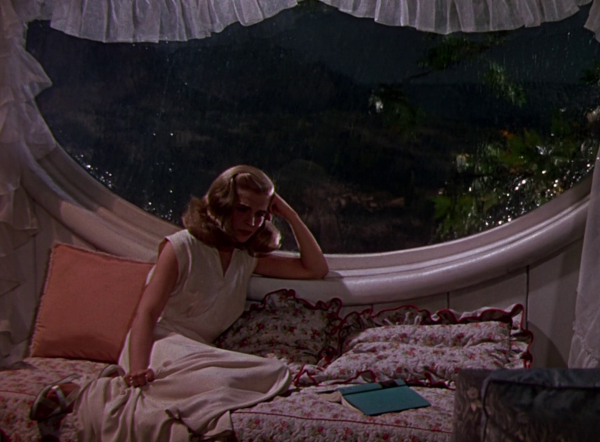
Desert Fury (Lewis Allen, 1947). This grand melodrama is spectacularly overheated in every way that matters: Miklós Rózsa’s insistent music score, Edward Cronjager and Charles Lang’s color-drenched cinematography, performances pitched to the back row, and all sorts of sweaty innuendo. Set in a scrubby Nevada town, Desert Fury is put into motion by the arrival of Eddie Bendix (Josh Hodiak) and Johnny Ryan (Wendell Corey), low-level crooks with designs on elbowing into the local gambling trade. They also seem fond of each other in a manner that goes beyond chaste camaraderie, though that doesn’t stop Eddie from romancing a lovelorn local woman named Paula (Lizabeth Scott). That coupling raises the ire of both Johnny and Tom Hanson (Burt Lancaster), a police officer who’s long pursued Paula. Some of the plotting doesn’t particularly make sense, mostly because of a reliance on drastic emotional pivots. The dialogue is terrific, though. Robert Rossen (with an uncredited assist from A. I. Bezzerides) lays out noir-style language that connects with the firm snap of a pistol hammer. Lewis Allen directs with the proper heedless urgency.
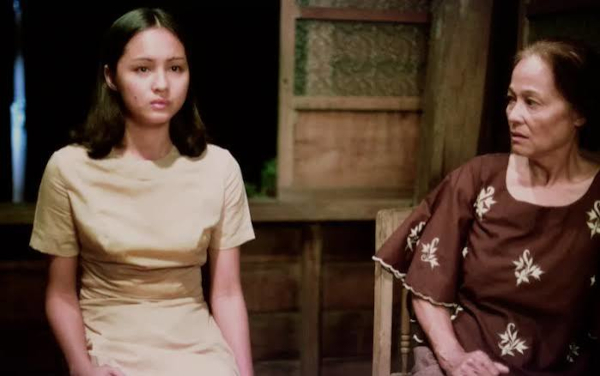
Itim (Mike de Leon, 1976). The pacing on this psychological horror film is a little slow, but director Mike de Leon also uses the deliberate storytelling to his advantage. He’s especially effective at finding small, budget-friendly methods to bring on the creeps. My favorite involves nothing more than a set of keys in a cabinet door dangling in motion. The film’s plot is concerned with a family that comes to believe that a missing member, who was serving as a nun, is dead, perhaps through nefarious means. As they are dabbling in mysticism to try and contact her, a parallel story follows a photographer (Tommy Abuel) who has come home to visit his infirm father (Mario Montenegro). The two tracks converge, and any seasoned moviegoer will discern the shocking twists well before they play out on screen. It’s all about the panache in the storytelling. In that, Itim largely delivers. As the sister of the departed, saintly soul, Charo Santos-Concio runs the full gamut of fretfulness through most of the film before finally getting to go full bore in the last scene.
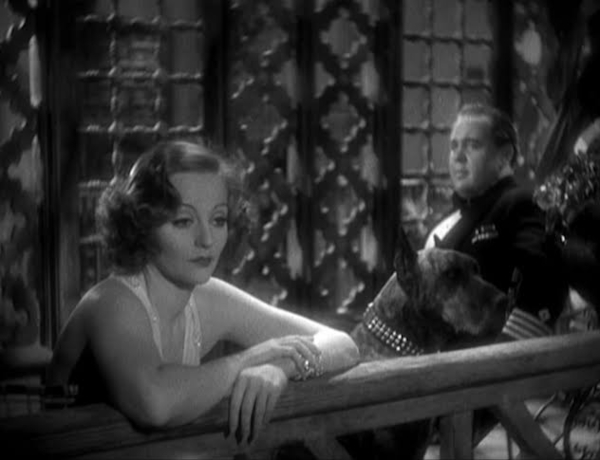
Devil and the Deep (Marion Gering, 1932). From the era the guideposts of Hollywood movies were still being set, Devil and the Deep is a torrid melodrama and a submarine adventure all in one. Charles Sturm (Charles Laughton) is an imperious naval officer who lives in a perpetual state of jealous fury, convinced that his attractive wife (Tallulah Bankhead) is cheating on him with any number of the sailors under his command. His aggrieved fervor hits such a crescendo that he imperils the entire crew of the underwater vessel he captains. Director Marion Gering moves capably between the film’s different modes, whether they hinge on shouting matches or gallons of water being hurled onto the set. He fully demonstrates the versatility that was required of the earliest filmmakers. Cary Grant blips through in an early role, and Gary Cooper is characteristically grumpy and stalwart as the navy man who is so irresistible that he does lure Mrs. Sturm into an affair. Laughton absolutely feasts in his first Hollywood movie, overplaying his scenes in a way that strangely seems deeply natural.
Discover more from Coffee for Two
Subscribe to get the latest posts sent to your email.

