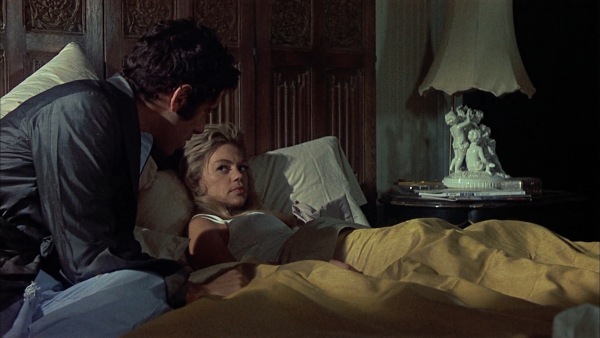
Bob & Carol & Ted & Alice (Paul Mazursky, 1969). If they retitled this movie so the character names progressed in alignment with the quality of the actors’ performances, it would be called Alice & Bob & Ted & Carol. Carol (Natalie Wood) is married to Bob (Robert Culp), and Alice (Dyan Cannon) is married to Ted (Elliot Gould). To some degree, everyone is dissatisfied. Any appreciation of their partners is eroded by the enticing promise of the counterculture and its tenets related to free love or subsequent animosity stirred by betrayals. It’s easy to understand how this film became a sensation upon its release, just a couple years after the eradication of the production code that would have forbidden the most basic premise of this comic drama. Nearly six decades later, the creaky dramatic contrivances are more prominent than the film’s daring. Cannon provide the film’s best acting by a significant margin. She goes deep enough that every shift of her character feels plausible, even logical. Paul Mazursky’s direction is as freewheeling as the swingers on the other side of his camera.
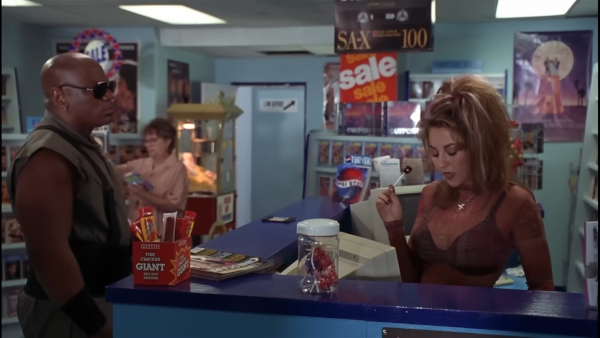
Videoheaven (Alex Ross Perry, 2025). Stretching to nearly three hours, this essay film about the depiction of the video store in pop culture is too long. I want to concede that point right off the top because Videoheaven is otherwise a movie that I take such delight in that it might as well have been engineered for me as gift. Director Alex Ross Perry edits together clips from an astounding range of movie and television shows, mixing a few news reports in with the fictional depictions of these emporiums of rentable cinema. He traces trends and considers how the shifting feel of these video stores on film reflected the broader culture. Maya Hawke narrates Videoheaven, calmly reading Perry’s academic-style observations about patterns he discerned while wading through all this footage. My first real job was as a video store clerk, so I’m especially susceptible to the hodgepodge of nostalgia and sociological surmising that Perry is laying down here. I was incredibly entertained by the whole endeavor.

Girlfight (Karyn Kusama, 2000). Karyn Kusama’s feature directorial debut (and her sole writing credit on a full-length film) is a smart, affecting character study that wears its feminist mission lightly. Diana Guzman (Michelle Rodriguez) is an unhappy teen growing up in Brooklyn. Struggling to find an outlet for her considerable anger, Diana gravitates to the boxing gym where her brother (Ray Santiago) trains with dreams of a professional career as a fighter. She convinces a reluctant coach (Jaime Tirelli) to take her under his wing and moves towards her own turn in the ring. Kusama follows familiar patterns but makes them feel fresh and inventive, as much because of the energy she brings to the storytelling as the novelty of her female lead character. The only aspect of the film that comes across as false is the generic menace of Diana’s mean father (Paul Calderón). Rodriguez is marvelous as Diana. She’s completely natural as she reveals all the layers of the character.
Discover more from Coffee for Two
Subscribe to get the latest posts sent to your email.

