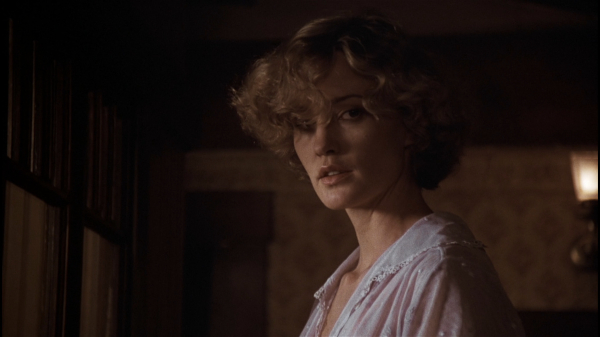
The Postman Always Rings Twice (Bob Rafelson, 1981). This adaptation of James M. Cain’s novel is too self-conscious about its mission to correct for the era-necessitated timidity of the film noir classic made from the same source material some four decades earlier. Screenwriter David Mamet and director Bob Rafelson want to make a movie about people who are turned on by violence, but the drama is so muddled that it comes across as the filmmakers’ kink rather than that of the characters. During the Depression, Frank Chambers (Jack Nicholson) stops in a roadside diner while on his way west. His path is officially belated when he gets an eyeful of Cora (Jessica Lange), wife of the establishment’s proprietor (John Colicos). Frank takes a job at the outpost and quickly — probably too quickly to be fully believable — launches into an affair with Cora. The duo’s scheming progresses to the point that there’s a dead body, which is the beginning rather than the resolution of their troubles. Nicholson never seems to get a proper handle on his role, but Lange has a couple scenes where she revs the engine that she would run full throttle one year later when delivering career-best work in Frances.
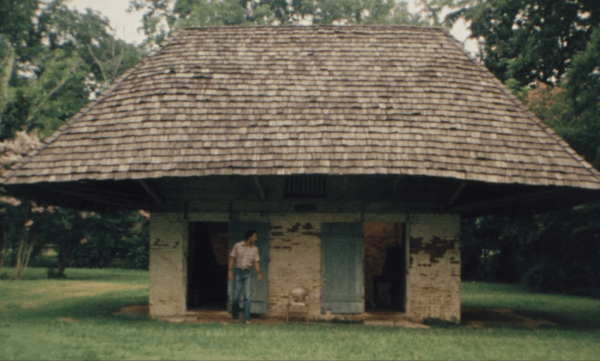
Cane River (Horace B. Jenkins, 1982). This low-budget feature wisely, carefully explores the complicated, sometimes conflicting cultures of Black communities in Louisiana. If the lessons are occasionally delivered bluntly, the purpose of the film is deeply worthwhile. Peter (Richard Romain) returns to his Louisiana hometown after rejecting a lucrative offer to become a NFL player. He longs to be a poet instead, and he takes advantage of his family’s wealth to spend his days amidst sun-dappled, Southern greenery scribbling in his notebook. He also romances Maria (Tommye Myrick), a working-class woman he meets at her job as a plantation tour guide where she’s willing to go off-script to sharply denounce the downplaying of historical oppression. The normal push and pull of two people getting to know each other as they fall in love is made yet trickier by their different class backgrounds and associated understandings of how systemic injustice plays out. Cane River is a simple story with wellsprings of depth, and director Horace B. Jenkins handles it all with delicacy and thoughtfulness. Both Romain and Myrick give strong, charismatic performances. Some of the actors around them betray their amateur status.

Hidden in the Fog (Lars-Eric Kjellgren, 1953). Hidden in the Fog courts comparisons to Otto Preminger’s Laura so ardently that one character specifically mentions the earlier drama. The film opens with Lora (Eva Henning) firing a pistol at her seated husband (Georg Rydeberg) and then fleeing the scene of her murderous assault. What initially seems clear about the story grows far more complicated as details emerge. Even as the film takes a bit to get going and its energy sometimes lags, the plot is pleasingly twisty. Director Lars-Eric Kjellgren has a strong visual sense and clearly knows when he can allow cinematographer Gunnar Fischer to drench the film in lovely shadows and when the storytelling requires a straightforward approach. There’s strong acting across the cast. Of special note, Dagmar Ebbesen is terrific as a seen-it-all maid and Sonja Wigert has nice snap as a vamp in the middle of the sordidness.
Discover more from Coffee for Two
Subscribe to get the latest posts sent to your email.

