
We’re All Going to the World’s Fair (Jane Schoenbrun, 2021). The first narrative feature directed by Jane Schoenbrun is an utterly fascinating work that, among other things, inventively examines how lost people try to make sense of themselves and their place in the world through the oddities they find on screens. Casey (Anna Cobb, who’s remarkable in the role) is a lonely teenaged girl living with an inattentive single parent. She mostly hangs out in her attic bedroom staring at her laptop and occasionally posting her own videos. She decides to participate in the World’s Fair Challenge, a viral online ritual that supposedly triggers drastic, horrifying changes in the people who follow its steps. As they proved decisively in their next film, the stunning I Saw the TV Glow, Schoenbrun is a master of stirring dread through the patient development of small, slightly askew details. The basic plot of We’re All Going to the World’s Fair bears some resemblance to any number of horror films that favor heightened unreality and gory shock. Schoenbrun is a subtler, more thoughtful artist than that. This is a moving, disturbing film that posits that the only way out of enveloping misery and uncertain identity is running straight at the part of existence liable to exact the most damage.
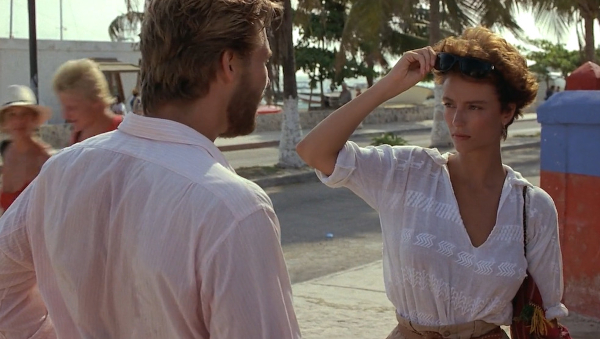
Against All Odds (Taylor Hackford, 1984). Taking a look at Against All Odds now means getting a harsh reminder of how often the slickest studio efforts of the nineteen-eighties had hollowed-out souls. Although I have to admit this film suffered from me watching it so soon after a repeat viewing of the vastly superior film noir that it remade, Out of the Past, I genuinely believe this drama would be dismal without the comparison. Terry Brogan (Jeff Bridges) is a pro football player unwilling to accept that his broken body means the old sports career is at an end. Searching for a way to revive his fortunes, Terry is implausibly drawn into the hunt for a missing heiress (Rachel Ward). Very little detective work is required to track her down in Mexico, and Jake falls into an affair with the woman, a risky proposition given that her boyfriend (James Woods) is both an old pal of his and a sadistic gangster. The plot doesn’t really cohere, the dialogue is flat, and the performances from the main actors are so uninvolved that calling them surface-level is an overstatement. Taylor Hackford directs with an air of anonymity.

Man Wanted (William Dieterle, 1932). Man Wanted is a paragon of efficiency. A modern romcom could only dream of such focused storytelling. Kay Francis stars as Lois Ames, the driven editor of a glossy national magazine. In need of a new secretary, she hires a strapping young man (David Manners) who comes to her office trying to sell her an exercise machine. Stuck in a frustrating marriage to an aimless son of wealth (Kenneth Thomson), Lois falls for this devoted new employee. The feelings are reciprocated, but there are all these outside entanglements to consider, including Tom’s brassy fiancée (Una Merkel). The screenplay, which is primarily the handiwork of studio workhorse Charles Kenyon, keeps all these characters and more zinging around without ever allowing the packed plot to feel antic. William Dieterle’s direction is first-rate. Even as he keeps the storytelling as lean as possible, Deiterle takes the time for a few inventive moments, such a view of two roommates commiserating that looks like an inky shot from a film noir and another than puts the two leads on opposite sides of a door.
Discover more from Coffee for Two
Subscribe to get the latest posts sent to your email.


“Taking a look at Against All Odds now“
I see what you did there! 😉
You sure did.