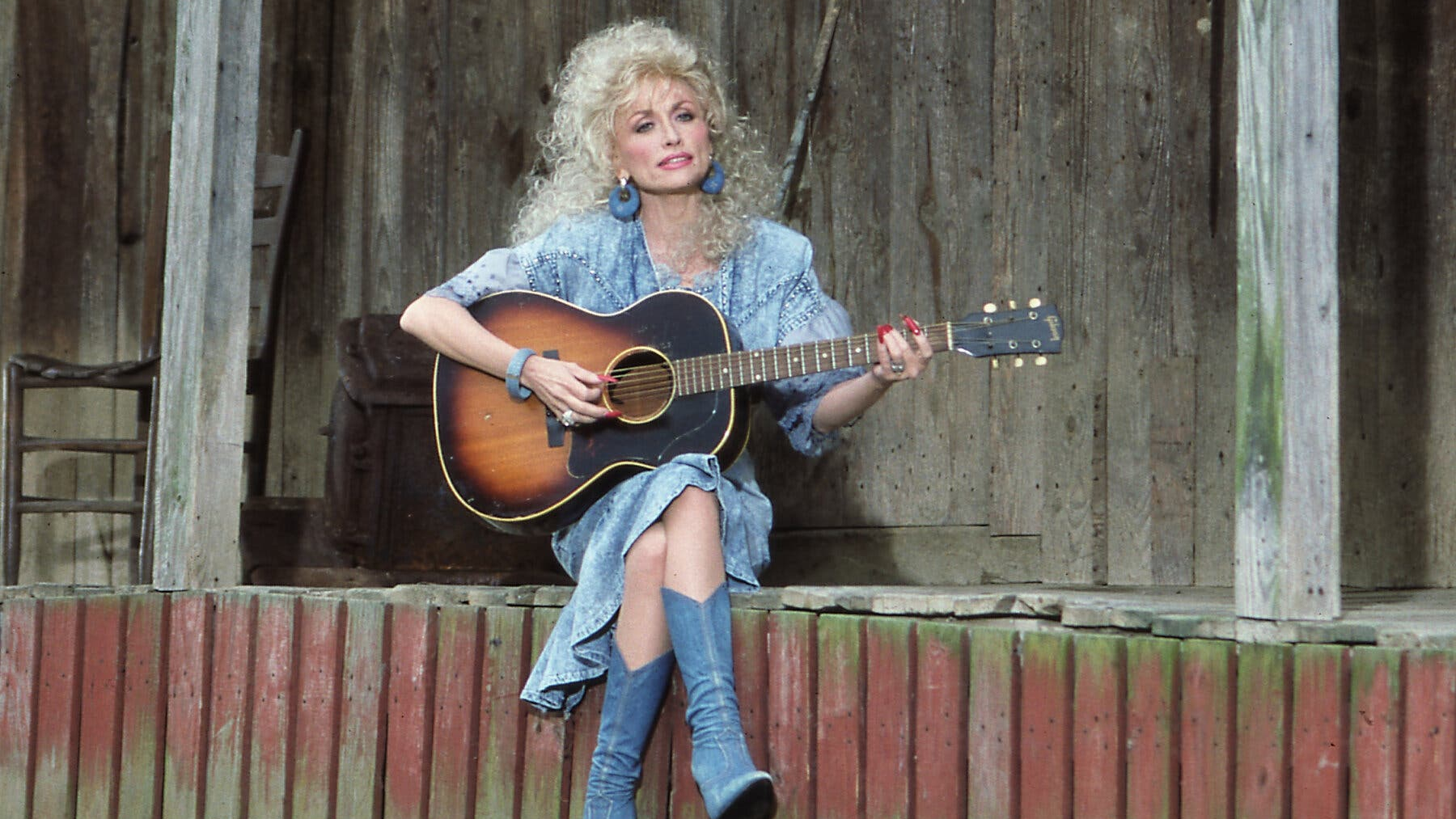
A little more than thirty years ago, Dolly Parton started a charitable organization called Imagination Library. The group began by serving Sevier Country, the area in Tennessee where Parton was born and raised. Each child in the county received a free book in the mail every month until they were ready to go off to school. It was an effort to promote literacy in recognition of the poor people Parton grew up around who never learned to read, a number that included her own father. Five years later, Parton and her team took the program international, teaming with any community that would contribute resources to help support the effort. According to Imagination Library, over three million books are currently delivered each month to children in five different countries. More than three hundred and thirty million books have been gifted in the organization’s existence.
When a child ages out of the Imagination Library program, they receive a letter with Parton’s signature on it. The letter reads in part: “You and all of your friends are very special. There is no limit to what you can do or how far you can go. Just remember the lessons my family taught me — dream big dreams; learn everything you can learn; and care for those who care for you. You do all of these things and you can be anyone you want to be.”
By the time I was old enough to pay attention, Parton was already an icon. As much as anyone else, she was the artist who defined the sound of country music in the nineteen-seventies. She had ten hits that topped the country charts in that decade, part of a total of twenty-five singles that achieved that feat, still more than any other female artist. Her stardom was so significant that it could sometimes obscure that, first and foremost, she was a tremendous songwriter. It’s now a beloved part of the deep lore of pop music that Parton wrote “Jolene” and “I Will Always Love You,” two absolutely masterful songs, on the same day. Joining those two were hundreds more.
Parton is one of the only public figures — maybe the only public figure — who built on her fame in a way that made her almost universally adored. The “almost” might not be necessary in the preceding sentence. She didn’t achieve this by being a blank slate. Though hardly political in her pose, Parton also didn’t hesitate in championing marginalized communities, particular those that hold up a rainbow flag to declare their pride. Among the many accolades in her career, Parton earned two Academy Award nominations. The first was for the title song to the 1980 comedy 9 to 5, which also featured her utterly charming debut as a movie actress. The second nomination is more telling. It came for “Travelin’ Thru,” written for the 2005 film Transamerica. The drama is about a transgender woman traveling cross-country to a potentially fraught reunion with the family that hasn’t yet accepted her true self. Parton’s song is packed with religious imagery, but it’s also clearly about a person transitioning in a way that might cause consternation with regressive forces in society: “God made me for a reason and nothin’ is in vain/ Redemption comes in many shapes with many kinds of pain.” It’s an incredibly bold song, but there’s no sense of that whatsoever in Parton’s delivery of it. The sentiments are pure and pragmatic, simple as can be. When she strode onto the Oscars stage that year to perform the song, it was like joy itself had arrived.
In her art, in her public persona, in seemingly every moment of her big, heartfelt life, Parton was the exemplar of how great and grand a human being can be. What’s more, she did it all with humility and uncommon generosity. We could all do far worse than to follow her advice:
Dream big dreams.
Learn everything you can learn.
Care for those who care for you.
Discover more from Coffee for Two
Subscribe to get the latest posts sent to your email.

