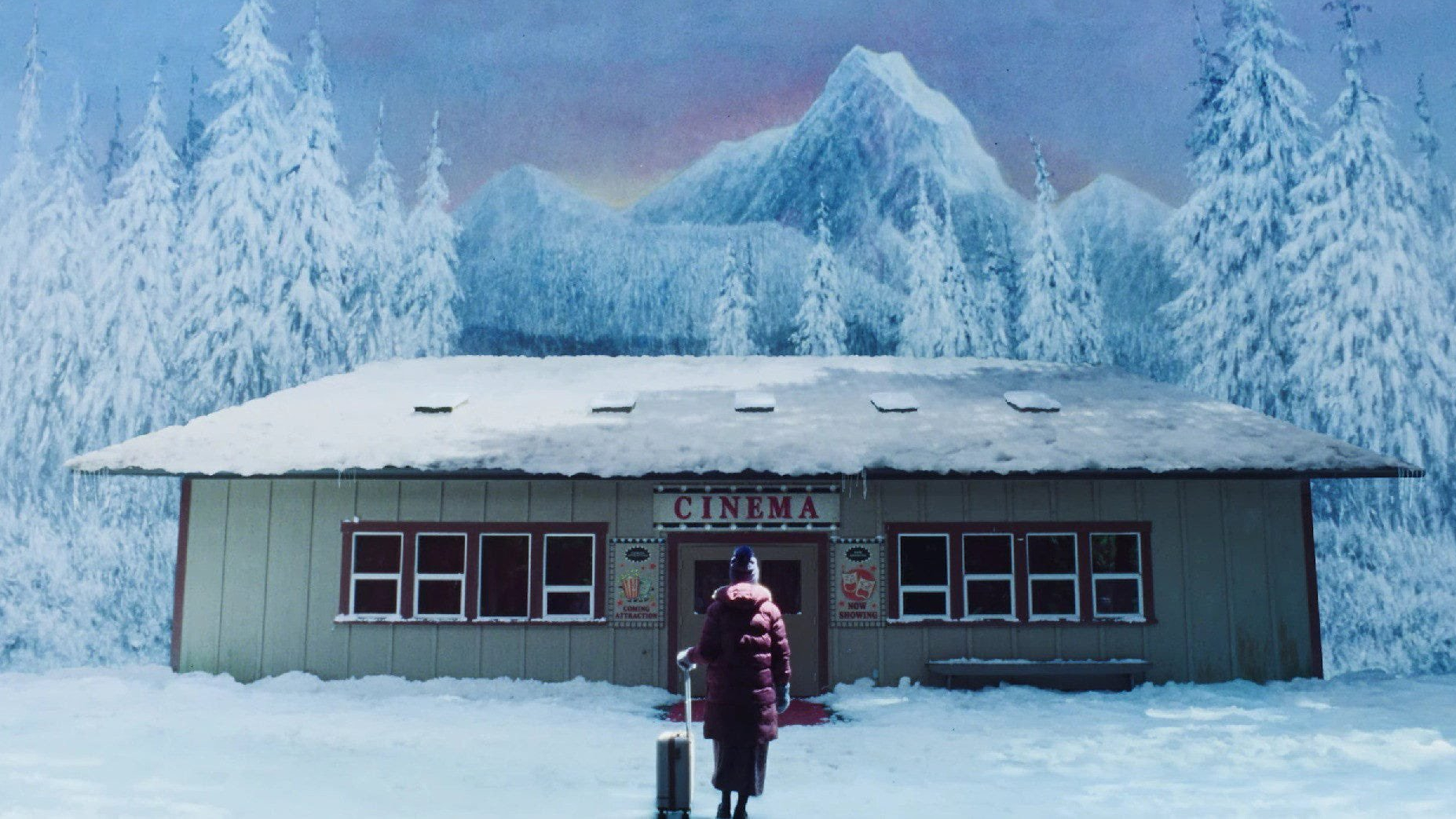
No one else makes films like Jane Schoenbrun. All three of their fiction features have been strikingly odd and yet utterly, piercingly logical. Another key commonality of the films is a deep interest in how human interaction with screens has a warping effect. Their debut, We’re All Going to the World’s Fair, considered computer screens, and the extraordinary I Saw the TV Glow, turned to television entertainment. Now, perhaps inevitability, the filmmaker arrives at movies. More specifically, Schoenbrun sets the sights of their latest, Teenage Sex and Death at Camp Miasma, on the sorts of horror movies that knocked off adolescents with inventively gruesome kills administered by a distinctively masked, seemingly unstoppable boogeyman.
Schoenbrun’s film is a fascinating thesis with layer upon layer to unfold and ponder over. It’s also wickedly, riotously entertaining. Teenage Sex and Death at Camp Miasma stars Hannah Einbinder as Kris Williams, a Sundance-lauded writer-director who’s been tapped to reboot a trashy old slasher franchise (which Schoenbrun has modeled after the Friday the 13th film series with the loving care of a helpless devotee) as a new exercise in elevated horror. Kris hopes her struggles with the script can be remedied with the unexpected boon of a meeting with Billy Presley (Gillian Anderson), the actress who portrayed the final-girl heroine of the first Camp Miasma flick (in scenes from that film with the film, the character is played by Amanda Fix) before largely withdrawing from showbiz and, it seems, society in general. If there was any doubt that peculiar inspiration might be drawn from this particular tête-à-tête, it turns out that Billy has taken up residence on the grounds of the abandoned summer camp where Camp Miasma was filmed.
Because of the way Schoenbrun spins between realism and artifice — including outdoor visuals that often resemble stylized paintings — Teenage Sex and Death at Camp Miasma can take on the buzzed lilt of metafiction, but that’s not quite what’s happening here. Schoenbrun isn’t standing outside of their fiction and calling attention to its seams. Instead, they dive deeply into the allure of dark stories, particularly those told through the enveloping form of cinema. A film shapes the viewer at the same time a viewer silently reconfigures the film through the resonant power of their interpretation. Schoenburn melds this romantically toxic, codependent view of art with a flinty story about sexual awakening that posits that the most commonplace theories are inadequate to cover the breadth of human experience. In the best way, the film is a lot. It’s like living within a library of bold ideas.
Schoenbrun directs with a grand, twisted visual sense and is headlong in their approach to film’s comedy, horror, and groovy melodrama. A film this daring requires uncommon commitment from the actors, and Einbinder and Anderson meet the challenge. They’re both dazzling while working in notably different registers that nonetheless align beautifully. Anderson is gloriously grandiose, taking a tonal cue from Gloria Swanson’s performance as Norma Desmond, a character specifically cited in Schoenbrun’s script. Einbinder’s turn bears a superficial resemblance to her justly Emmy-winning work on Hacks. She is simultaneously more restrained and differently off-kilter as Kris, believably striding into the plot’s more fantastical turns with a grounding vulnerability and emotion.
Teenage Sex and Death at Camp Miasma is terrifically unique. Much as its giddy strangeness is the defining quality, Schoenbrun keeps the film tethered to discernible, fascinating concepts. It sometimes feels like they’re figure out their world, their art, and their self in real time. As they do it, they’re bravely asking everyone to watch.
Discover more from Coffee for Two
Subscribe to get the latest posts sent to your email.

