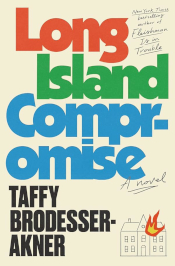
Long Island Compromise (2024) by Taffy Brodesser-Akner
She’d thought she could get them to see her point of view, or at least who she was. But for as smart as Jenny was, it became clear only after her brothers were gone off to college that there was no fighting any of it. Only when the house was finally that quiet and empty was she truly able to hear how her own voice matched her mother’s in shrillness when she was angry. It scared her enough that it was then that she began to shut down. Her anger became a glibness; her anguish became apathy, her anxiety a studied calm. Her fight was not to fight with her family, but to save her fight for later. For only when it was finally quiet could she finally, truly see her role in the family, which was to the be the person running as far from it as she possibly could.
I was a big fan of Taffy Brodesser-Akner’s debut novel, Fleishman Is in Trouble, and was similarly wowed by the New York Times Magazine article she wrote about her vague proximity to a sensational nineteen-seventies kidnapping case. I fully expected to be taken with her latest fiction work inspired by that tale from her past. Instead, I found Long Island Compromise to be a little disappointing. Brodesser-Akner’s voice is as strong as ever. She remains a novelist in a classic American mode. Her previous book prompted me to make comparisons to Philip Roth and John Updike, and I see the same similarity here, albeit with the latter more prominent than the former. This time, it’s coupled with some of the sprawling sardonicism of Jonathan Franzen. In that way, the book remains full and satisfying.
I think I just couldn’t quite find Brodesser-Akner’s main thesis in this sophomore effort. She is thorough and ruthless in her depiction of the fallout endured by the wealthy Fletcher family in the aftermath of the father’s abduction; every character has at least of touch of disaster to them. Their emotional movements sometimes seemed to be guided by authorial whims rather than a discernible through line in the text. The story is still entertaining — and Brodesser-Akner remains a writer of uncommon comic gifts — but it also comes across as looser than is ideal.
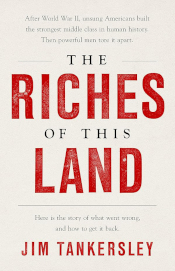
The Riches of This Land (2020) by Jim Tankersley
Too many Americans never learned the lesson of what looms, in our national memory, as the Golden Era of our economy. For too long, our leaders told stories about civil rights and gender equity that were far too narrow. They sounded like victories for one group — not victories for all groups. Too many Americans have not been taught that their stories are everyone’s stories, their victories are everyone’s victories. It is a strange idea — that the liberation of the oppressed actually helps the longtime oppressor — but the evidence is clear, in the people and in the math. But when you don’t hear the idea repeated to you, when it’s not drilled into you in school or over the airwaves or on the campaign trail, you fall vulnerable to an easily told, easily grasped lie about the economy: the idea that progress for one group necessarily brings down another. And if you believe that lie, you blind yourself to what’s really afflicting the economy — and what we really need to do to get it back on track.
This book is a pointed accounting of how U.S. political leadership helped ravage the middle class, in part by developing a cruel hostility towards programs and policies meant to help traditionally oppressed social groups. The Riches of This Land was published in the summer of 2020, while the world closed up in response to the COVID-19 virus, and it’s interesting to see how valiantly Jim Tankersly and his editorial cohorts try to include some vague predictive thoughts about how the global pandemic might counter or exacerbate the long-term trends identified in the book. Inevitably, some of those bits feel hastily grafted on, the uncertainty at the point of publication hanging over the ideas. Similarly, Tankersly writes from the perspective of one haphazardly ineffective presidential administration by a lifelong criminal who masqueraded as a successful businessman, unable to fully fathom how much worse it could get. The book’s impressive scholarship looks shortsighted given the ravaging of the nation that followed.
Where it falls short on the present and future, the book does well on the past. Tankersly makes a compelling argument that expanding opportunities to those who previously been barred access to upward mobility ultimately helps everyone, even the wealthy class who are so painfully desperate to keep every penny for themselves. Until political and business leaders put a halt to it, the culture was truly progressing in every possible way.
Discover more from Coffee for Two
Subscribe to get the latest posts sent to your email.

